Yacht interior design isn’t your typical home improvement project, it’s a specialized field where luxury meets marine engineering, and every square inch counts. Unlike designing a living room or bedroom, yacht interiors demand materials that can withstand saltwater corrosion, humidity swings, and constant motion. Whether someone’s outfitting a modest cruiser or a luxury vessel, the principles remain the same: maximize space, prioritize durability, and create an environment that feels both elegant and seaworthy. This guide breaks down what makes yacht interiors unique, the design principles that matter most, and popular styles shaping luxury yacht interior design in 2026.
Table of Contents
ToggleKey Takeaways
- Yacht interior design requires marine-grade materials like teak, stainless steel (316-grade), and specialized fabrics to withstand saltwater corrosion, UV exposure, and constant humidity that would damage standard home furnishings.
- Space maximization in yacht interiors relies on multifunctional furniture, vertical storage solutions, custom cabinetry, and lighting tricks—principles borrowed from tiny-home design that make compact cabins feel larger and more functional.
- Weight distribution and structural integrity are critical in yacht interior design; modifications must be approved by naval architects to prevent shifts in the vessel’s center of gravity that affect stability and fuel efficiency.
- Five dominant yacht interior design styles emerging in 2026 include Classic Maritime (teak and brass), Contemporary Minimalist (clean lines and hidden storage), Coastal Luxe (natural textures and neutral tones), Industrial Modern (matte finishes and metal accents), and Eclectic Glam (bold patterns and jewel tones).
- Professional yacht interior projects require marine-certified adhesives like epoxy resins and polyurethane compounds, experienced fabricators with composite material expertise, and compliance with classification society standards for fire resistance and emergency egress.
- Material selection significantly impacts maintenance demands—high-gloss varnished finishes demand annual refinishing, while composites and laminates used in contemporary styles offer durability with minimal upkeep but sacrifice traditional aesthetics.
What Makes Yacht Interior Design Unique?
Yacht interiors operate under constraints that landlubbers rarely face. First, there’s the marine environment: saltwater, UV exposure, and constant humidity will destroy standard home finishes in months. Materials must meet marine-grade certifications, think teak decking, marine plywood, stainless steel hardware, and UV-stabilized upholstery fabrics like Sunbrella or similar performance textiles.
Then there’s the motion. Everything aboard needs to be secured or designed to prevent shifting. Cabinetry requires positive-latch hardware (not magnetic catches), and furniture often gets custom-fitted or bolted down. Weight distribution matters, too, overloading one side of a yacht affects stability and fuel efficiency. Designers work closely with naval architects to ensure modifications don’t compromise the vessel’s balance or structural integrity.
Space is the third challenge. Even a 60-foot yacht has less usable interior volume than a typical single-family home, so yacht interior design ideas focus heavily on multifunctional furniture, hidden storage, and visual tricks to make cabins feel larger. Think Murphy beds, fold-down tables, and drawer systems that maximize every cubic inch.
Finally, there’s regulatory compliance. Yachts over a certain size must meet standards set by classification societies (like Lloyd’s Register or ABS) covering fire resistance, ventilation, and emergency egress. Cosmetic upgrades can’t interfere with safety systems, so if someone’s swapping out wall panels, they’d better match the fire rating of the originals.
In short, yacht interior design sits at the intersection of interior design, marine engineering, and cabinetry. It’s not a weekend DIY, most work requires fabricators experienced with composite materials and marine adhesives.
Essential Design Principles for Yacht Interiors
Maximizing Space in Compact Layouts
Every yacht interior is a lesson in spatial efficiency. The best designs borrow from RV and tiny-home strategies: vertical storage, recessed shelving, and convertible surfaces.
Bulkheads (yacht-speak for walls) are prime real estate. Custom cabinetry can be built into these structural panels, using the full height from deck to overhead (ceiling). Drawer systems with soft-close ball-bearing slides work better in marine applications than traditional shelves, which let items tumble in rough seas. Many yacht builders install drawer dividers and fiddle rails (raised edges) to keep contents secure.
Lighting plays a huge role in perceived space. LED strip lighting installed under cabinets, along toe kicks, or behind mirrors adds depth without eating up room. Recessed overhead LED fixtures (often rated for 12V DC systems common on yachts) replace bulky dome lights. Dimmer controls let occupants adjust ambiance, critical when someone’s trying to sleep in a shared cabin.
Mirrors and light-colored surfaces amplify the effect. Glossy lacquered panels or high-gloss laminates reflect light and make narrow corridors feel wider. But, these finishes show fingerprints and require regular maintenance, a trade-off to consider.
Folding and sliding elements are everywhere. Pocket doors save swing space. Drop-leaf tables extend for meals, then fold flat against a wall. Benches lift to reveal storage compartments. Some condo interior design tactics translate well here, especially around maximizing vertical real estate and creating zones within open layouts.
Choosing Durable, Marine-Grade Materials
Material selection separates amateur yacht refits from professional work. Standard home-improvement materials won’t cut it.
Wood: Teak remains the gold standard for yacht interiors, naturally oily, rot-resistant, and dimensionally stable in humidity. Mahogany and cherry also appear in luxury yacht interior design, but they require marine-grade varnish (multiple coats of Epifanes or Awlgrip polyurethane) to protect against moisture. Plywood must be BS 1088 marine plywood (made with waterproof adhesive and no voids). Anything less will delaminate.
Upholstery and Fabrics: Marine-grade fabrics resist mold, UV fade, and saltwater staining. Sunbrella, Crypton, and Ultrasuede are common. Avoid natural fibers like cotton or linen unless treated with mildew inhibitors. Foam cushions should be open-cell marine foam, which drains water and dries quickly, closed-cell foam traps moisture and breeds mold.
Flooring: Teak and holly is the classic yacht sole (floor) combo, teak planks with thin holly strips for contrast. Modern alternatives include luxury vinyl plank (LVP) designed for marine use, with fiberglass-reinforced backing and slip-resistant textures. Carpet is rare below deck due to moisture issues, but when used, it’s marine-grade polypropylene that resists staining and dries fast.
Hardware and Fixtures: Stainless steel is standard, but not all grades are equal. 316-grade stainless (also called marine-grade) resists corrosion better than 304-grade. Hinges, drawer pulls, and fasteners should all be 316. For plumbing, bronze or composite (Marelon) fittings outlast brass, which dezincifies in saltwater.
Countertops: Solid-surface materials like Corian or similar acrylics are popular, they’re non-porous, repairable, and can be thermoformed to fit curved bulkheads. Quartz works but adds weight. Granite is rare due to weight and brittleness under vibration. Laminate countertops are fine for budget refits, but edges must be sealed with marine-grade edge banding to prevent moisture intrusion.
Adhesives matter as much as materials. Standard wood glue or construction adhesive won’t hold. Use epoxy resins (like those from West System) or polyurethane adhesives (3M 5200 for permanent bonds, 3M 4200 for semi-permanent). These stay flexible and waterproof under stress.
Anyone tackling a yacht refit should consult with a marine surveyor or naval architect before altering structure or adding significant weight. What seems like a cosmetic upgrade, say, replacing a countertop, can shift the vessel’s center of gravity if materials aren’t carefully chosen.
Popular Yacht Interior Design Styles
Yacht interior design styles in 2026 range from classic elegance to ultra-modern minimalism. Here’s what’s trending.
Classic Maritime: Think varnished teak, brass accents, and navy-and-white palettes. This style nods to traditional sailing yachts, polished wood joinery, analog gauges, and nautical details like rope trim or porthole mirrors. It’s timeless but labor-intensive: maintaining high-gloss varnish requires annual refinishing. Hardware is often solid brass, which tarnishes and needs regular polishing unless it’s lacquered.
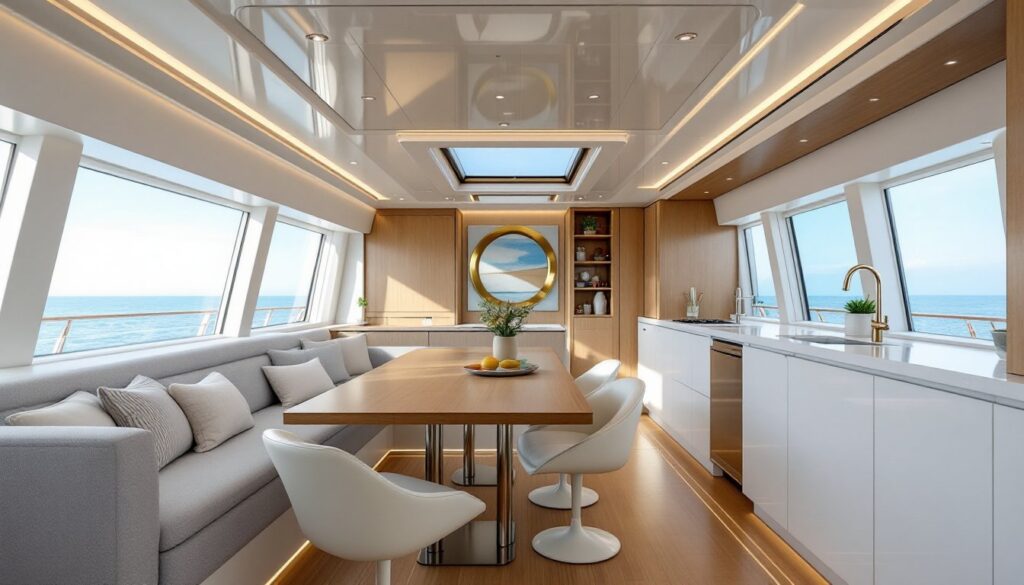
Contemporary Minimalist: Clean lines, neutral tones, and hidden storage define this aesthetic. Materials lean toward high-gloss lacquered panels, stainless steel, and glass. Lighting is integrated and indirect, LED tape lights behind panels or under cabinetry. According to recent design showcases, structural glass elements are gaining traction in larger yachts, maximizing natural light while maintaining sleek profiles. Furniture is often custom-built and low-profile to preserve sightlines.
Coastal Luxe: A softer take on modern design, this style incorporates natural textures, linen upholstery, bleached oak, rattan accents, alongside whites, soft blues, and sandy neutrals. It’s less formal than classic maritime but warmer than stark minimalism. This approach borrows heavily from high-end residential design seen on platforms like Architectural Digest, adapting those ideas for the marine environment with performance fabrics and sealed wood finishes.
Industrial Modern: Exposed fasteners, metal accents, and matte finishes characterize this edgier style. Brushed stainless, anodized aluminum, and composite panels replace wood. Color schemes run to grays, blacks, and metallic tones. It’s popular on performance yachts and superyachts where function trumps ornamentation. Durable and low-maintenance, but it can feel cold without careful lighting and textile choices.
Eclectic Glam: Bold patterns, jewel tones, and mixed materials, this style takes risks. Designers might pair lacquered cabinetry with metallic wallpaper, velvet cushions, and custom murals. It’s high-maintenance and requires expert fabrication to avoid looking chaotic. Works best on larger vessels where there’s room to let individual spaces have distinct personalities. Inspiration often comes from design hubs like Homedit, which showcases creative residential interiors that translate surprisingly well to yacht settings when adapted with marine-grade materials.
Material Choices by Style: Classic maritime demands real wood and traditional joinery. Contemporary and industrial styles lean on composites and laminates, which are lighter and easier to maintain. Coastal luxe sits in between, using wood veneers over engineered cores to get the look without the weight.
For anyone designing or refitting a yacht, an interior design portfolio can help visualize the direction and communicate with fabricators, yacht work often requires detailed drawings and material specs before any cutting begins.
Conclusion
Yacht interior design is where craftsmanship, engineering, and aesthetics collide. It demands marine-grade materials, careful weight management, and an eye for space efficiency that goes beyond typical home design. Whether someone’s drawn to classic teak-and-brass or sleek modern minimalism, success hinges on choosing the right materials, working with experienced fabricators, and respecting the unique demands of life on the water.