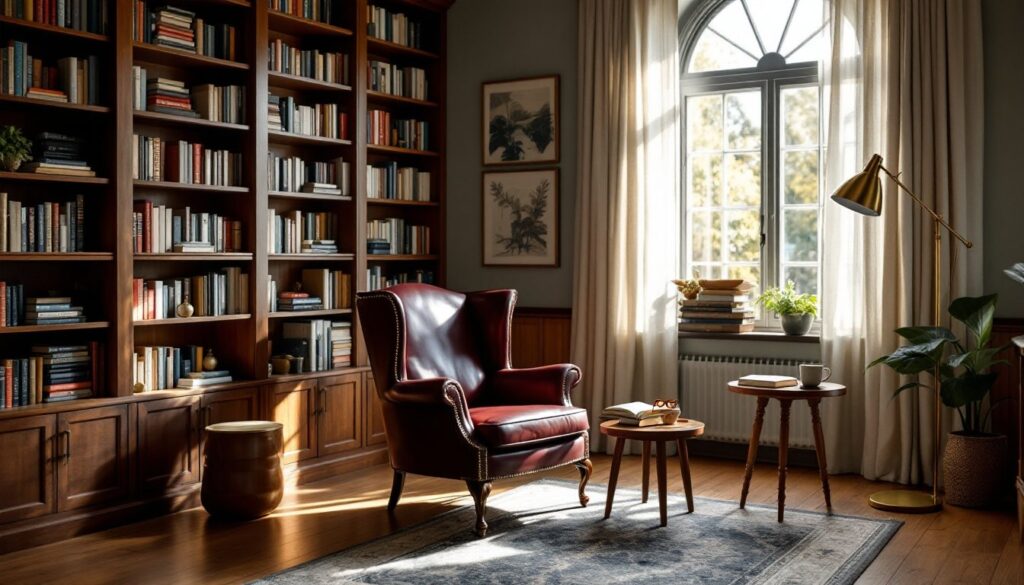
A dedicated library isn’t just for English country estates or historic mansions. Today’s homeowners are carving out reading spaces in everything from spare bedrooms to unused corners under the stairs. Whether you’ve got a full room to dedicate or just a wall of shelves, thoughtful library <a href="https://homesteadhug.com/interior-design-portfolio-template/”>interior design creates a retreat that encourages reading, focus, and calm. This isn’t about stuffing books on shelves and calling it done, it’s about designing a space that works as hard as it looks good. Done right, a home library becomes one of the most-used rooms in the house.
Table of Contents
ToggleKey Takeaways
- Library interior design transforms small spaces like spare bedrooms or under-stair nooks into functional reading retreats that add real home value and adapt to every life stage.
- Proper shelving and storage solutions—such as ¾-inch plywood or solid wood shelves with center supports for spans over 32 inches—are the backbone of a well-designed library.
- Layered lighting design combining ambient (30-50 foot-candles), task (40-60 watts at 40-42 inches above seating), and accent lighting ensures reading comfort and highlights your collection.
- Deep greens, navy blues, charcoal grays, and warm browns create the cozy cocoon effect most readers want, while lighter palettes keep small or naturally dark spaces airy.
- Quality seating with lumbar support, paired with accessible side tables and storage solutions like ottomans or blanket chests, completes a functional library that encourages daily use.
- Vertical shelving and built-in window seats maximize even the smallest spaces, while light color palettes and strategic task lighting make cramped libraries feel larger and more inviting.
Why Every Home Deserves a Dedicated Library Space
Libraries offer something screens can’t: a physical separation from distractions. When you step into a dedicated reading space, your brain registers the shift. It’s the same principle that makes a workshop more productive than a garage stuffed with bikes and holiday decorations.
A home library adds real value, not just the sentimental kind. Appraisers and buyers notice custom built-ins, quality shelving, and purpose-built spaces. It’s also a flexible room. Kids outgrow playrooms, but a library adapts to every life stage. It can double as a quiet home office, a tutoring spot, or a place to spread out research materials without clearing the dining table.
Building a library forces you to organize your collection. You’ll finally sort that pile of paperbacks, donate duplicates, and arrange books in a way that makes sense. And unlike a gym membership or a craft room that goes unused, a well-designed library pulls people in. It’s low-maintenance, doesn’t require a learning curve, and delivers value every single day.
Essential Elements of Library Interior Design
Shelving and Storage Solutions
Shelving is the backbone of any library, and the type you choose depends on your space, budget, and how many books you own. Built-in shelves offer the cleanest look and maximize every inch, especially around windows, doors, or awkward corners. They’re permanent, plan carefully before committing. If you’re renting or might move, modular bookcases give flexibility without sacrificing style. Look for units that can be stacked or expanded as your collection grows.
For load-bearing capacity, ¾-inch plywood or solid wood shelves are the standard. Anything thinner will sag under the weight of hardcovers. If your shelves span more than 32 inches, add a center support or use thicker material (1-inch nominal). Adjustable shelving makes sense for mixed media, art books need more height than paperbacks.
Don’t overlook vertical space. Floor-to-ceiling shelves make a dramatic statement and store more books per square foot. Just keep a step stool or library ladder nearby. Rolling ladders with track systems are a classic touch, but they require solid blocking in the wall framing (consult a structural engineer or contractor if you’re retrofitting). For serious collectors, consider closed cabinetry on lower shelves to protect rare editions from dust and UV exposure.
Lighting Design for Reading Comfort
Poor lighting kills a library’s usability. You need three layers: ambient, task, and accent lighting. Ambient light (overhead fixtures or recessed cans) sets the baseline. Aim for 30-50 foot-candles in a library, bright enough to navigate but not glaring. Dimmable LEDs give control and won’t fade book spines the way incandescent bulbs can.
Task lighting is where you read. Adjustable floor lamps or swing-arm wall sconces let you direct light exactly where it’s needed. Position them to avoid glare on glossy pages. A good reading lamp delivers 40-60 watts equivalent of focused light. Many design professionals recommend placing task lighting at 40-42 inches above the seating surface for optimal coverage, similar to the approach seen in industrial interior spaces where functional lighting is prioritized.
Accent lighting highlights architectural details or prized book collections. LED strip lights behind crown molding or inside glass-front cases add drama without overpowering the room. If your library has artwork, picture lights or track lighting work well. Always check the color temperature, 3000K (warm white) feels cozier than the 5000K daylight bulbs common in workshops.
Choosing the Perfect Color Palette and Materials
Color sets the mood, and libraries tend to skew traditional. Deep greens, navy blues, charcoal grays, and warm browns create the cocoon effect most readers want. These colors also hide the visual chaos of mismatched book spines. That said, lighter palettes work if your space is small or lacks natural light, off-whites, soft grays, or muted sage keep things airy.
Woodwork matters. Hardwood trim, wainscoting, or picture rail molding gives a library architectural weight. Paint-grade poplar or MDF works for painted finishes: stain-grade oak, cherry, or walnut adds warmth. If you’re installing new trim, a 3½-inch or wider baseboard and 2½-inch casing feel more substantial than builder-grade profiles.
Floor material should be durable and quiet. Hardwood or engineered wood is classic and ages well. Carpet adds sound dampening, useful if the library doubles as a music listening room or borders a bedroom. Avoid high-gloss finishes on floors or walls: they create glare. A matte or eggshell sheen on painted walls is easier on the eyes and hides imperfections.
Texture adds depth without busy patterns. Think linen curtains, leather seating, wool rugs, or grasscloth wallpaper. Many homeowners turn to platforms like Houzz for material combinations and real-world examples of how different finishes perform over time.
Furniture Selection for Function and Style
Start with seating. A library needs at least one well-cushioned reading chair with good lumbar support. Wingback chairs, leather club chairs, and upholstered armchairs are popular for a reason, they’re comfortable for long sessions and look the part. Pair it with an ottoman or footstool: elevating your feet improves circulation during extended reading.
Scale the furniture to the room. Oversized pieces overwhelm small libraries, while spindly chairs get lost in large spaces. If the room is multi-use, consider a daybed or chaise lounge that doubles as guest seating. A writing desk fits naturally in a library, especially if the space also functions as a home office. Look for desks with drawers for office supplies and a footprint that doesn’t block book access.
Side tables are non-negotiable. You need a surface within arm’s reach for coffee, reading glasses, and the stack of books you’re working through. A 22- to 26-inch-tall table pairs well with standard seating heights. If space is tight, wall-mounted floating shelves or swing-arm trays work in a pinch.
Storage beyond books matters too. A flat file cabinet or map drawer works for oversized art books or documents. A blanket chest or storage bench keeps throws handy and provides extra seating. Avoid cluttering the room with decor that competes with the books, libraries should feel curated, not crowded.
Small Space Library Design Ideas
You don’t need a spare room to build a library. A 6-foot-wide wall is enough for floor-to-ceiling shelves and a chair. Hallways, landings, large closets, and under-stair nooks all work. The key is committing the space to reading and designing it intentionally.
Built-in window seats with flanking shelves are a classic small-space move. Frame a window with bookcases and add a cushioned bench in between. You’ll need 18 inches of depth minimum for comfortable seating. Use the space below the seat for pull-out drawers or lift-top storage. This setup works especially well in older homes with deep window wells.
Vertical shelving is your friend in tight quarters. Install shelves all the way to the ceiling and use a library ladder or folding step stool to access upper levels. Narrow shelves (8-10 inches deep) hold most books and take up less floor space than standard 12-inch units. If you’re designing a compact library, exploring online design communities can provide layout ideas and user-tested solutions for maximizing small footprints.
Corner spaces often go unused. A corner bookshelf or L-shaped built-in captures dead space and creates visual interest. Pair it with a small reading chair or pouf that can be moved when not in use. Even a murphy desk or fold-down wall shelf can turn a hallway into a functional reading nook.
Lighting becomes even more critical in small libraries. If there’s no room for a floor lamp, install a plug-in or hardwired wall sconce above the seating area. Battery-powered puck lights inside shelves add visibility without running new electrical, just remember to swap batteries annually. Design platforms like Dwell frequently showcase creative small-space solutions that balance style with practicality.
Finally, keep the color palette light in cramped quarters. White or pale gray shelves against soft wall colors make the space feel larger. Dark libraries are gorgeous but require square footage to pull off. If you love bold color, save it for an accent wall or the back panel of the bookcase rather than wrapping the whole room.