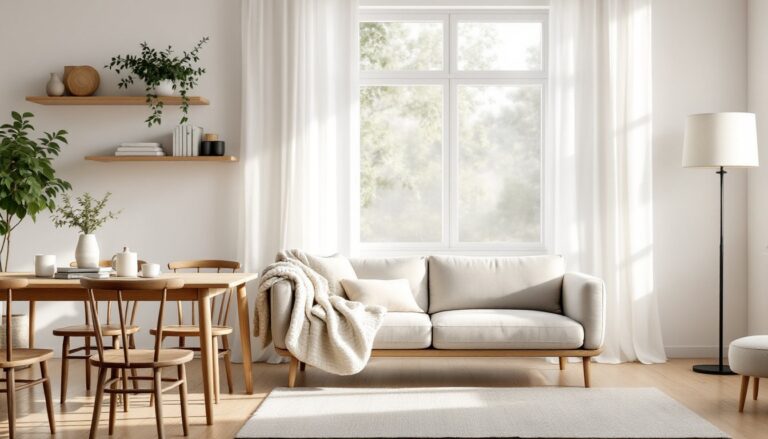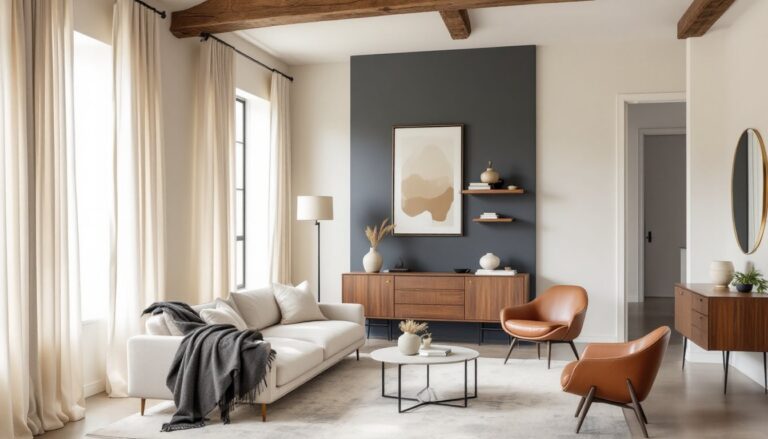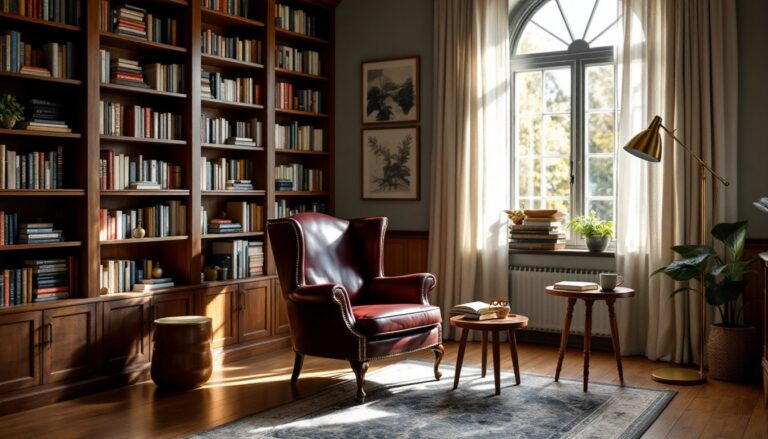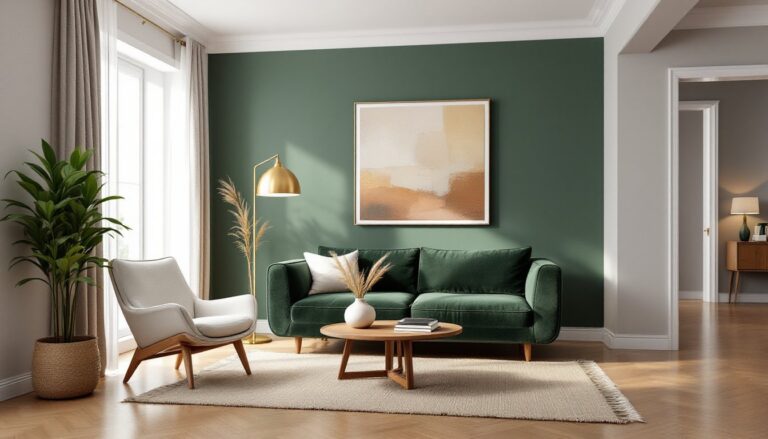
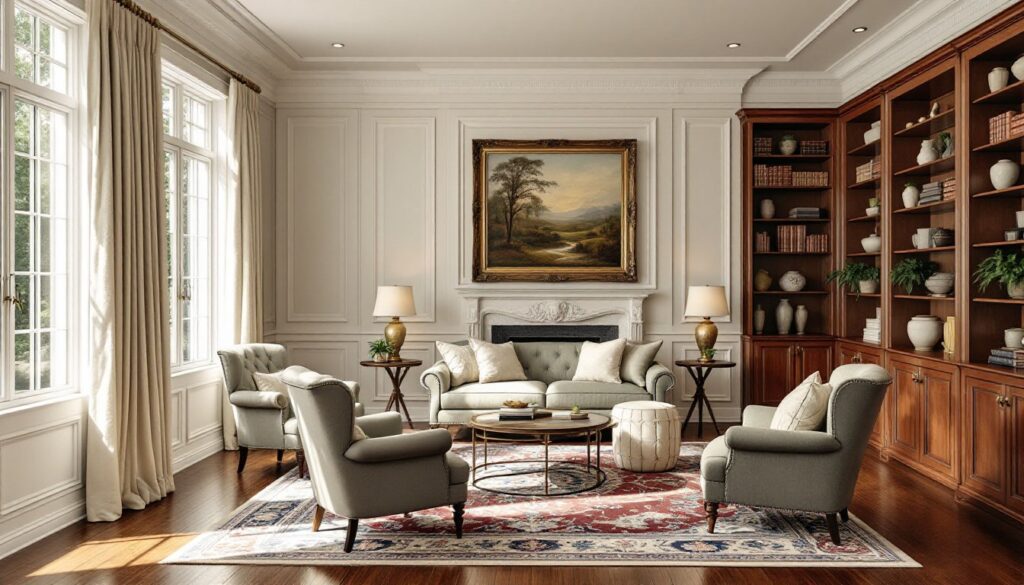
Traditional interior design never goes out of style, and there’s a reason why. It’s rooted in European sensibility, built on symmetry and quality craftsmanship, and designed to feel rich without being fussy. If someone walks into a room and immediately feels welcome, grounded, and slightly fancy, that’s traditional design doing its job. This guide breaks down what makes traditional style work, how to execute it in a real home, and where most DIYers trip up. Whether renovating a living room or furnishing a whole house, understanding these fundamentals makes the difference between timeless and dated.
Table of Contents
ToggleKey Takeaways
- Traditional style interior design emphasizes symmetry, quality craftsmanship, and layered richness rooted in 18th and 19th-century European décor for timeless elegance.
- Invest in solid-wood furniture with visible craftsmanship like dovetail joints and cabriole legs, paired with architectural details such as crown molding (3½ inches minimum) and wainscoting for authentic traditional interiors.
- Choose warm, neutral wall colors like “Revere Pewter” or “Accessible Beige” with deeper accent colors in fabrics, then balance with layered lighting from chandeliers, table lamps, and sconces using warm white LEDs (2700K–3000K).
- Arrange furniture symmetrically with sofas centered on focal points, flanked by matching end tables, and incorporate area rugs (8×10 or 9×12 typical) that extend at least 6 inches beyond furniture legs.
- Avoid common pitfalls like overdoing formality without warmth, ignoring scale and proportion, and choosing trendy décor over timeless pieces—traditional design rewards careful detail work and intentional material choices.
- Window treatments should feature floor-length drapery panels on quality hardware extending 4–8 inches beyond frames, paired with Roman shades or wood blinds for a polished, sophisticated finish.
What Is Traditional Style Interior Design?
Traditional interior design pulls from 18th and 19th-century European décor, think English manor houses, French country estates, and American Colonial homes. It values order, symmetry, and a layered richness that doesn’t scream for attention.
Unlike modern or contemporary design, traditional spaces favor ornate woodwork, classic furniture silhouettes, and layers of texture. Crown molding, wainscoting, and coffered ceilings show up frequently. Furniture tends toward wood frames with turned legs, upholstered pieces with rolled arms, and camelback sofas. There’s a formality to the layout: pairs of chairs flanking a fireplace, matching end tables, area rugs centered under seating groups.
Traditional design also leans heavily on historical references. Expect to see wingback chairs, tufted ottomans, Persian or Oriental rugs, and oil paintings in gilded frames. But it’s not a museum, these pieces get used. The goal is a lived-in elegance, not a roped-off parlor.
What it’s not: minimalist, industrial, or trendy. Traditional style doesn’t chase what’s hot on social media. It’s the design equivalent of a well-tailored blazer, classic, dependable, always appropriate.
Key Elements of Traditional Interior Design
Furniture and Architectural Details
Traditional furniture is all about wood species and joinery. Mahogany, cherry, walnut, and oak dominate. Look for pieces with visible craftsmanship: dovetail joints, inlaid veneers, carved details. A traditional dining table might feature cabriole legs (the curved S-shape leg) or a pedestal base with claw feet.
Seating runs formal. Wing chairs, Chesterfield sofas, and slipper chairs are mainstays. Upholstery tends toward tight backs and smooth cushions, not the overstuffed sectionals common in casual spaces. Nailhead trim along seams adds polish without going over the top.
Architectural details carry serious weight. Crown molding should be at least 3½ inches tall, skimpy trim reads cheap. Baseboards run 5 to 7 inches in height, often with a shoe molding at the floor. Panel wainscoting works well in dining rooms and hallways, typically installed to a height of 32 to 36 inches (one-third of wall height is the standard rule).
Built-ins matter. Floor-to-ceiling bookcases with adjustable shelving, window seats with storage below, and hutches with glass-front cabinets all reinforce traditional design. If adding built-ins, use face-frame construction and raised-panel doors to match the style. Paint-grade MDF works fine if budgets are tight, but stain-grade hardwood plywood with solid-wood edging looks more authentic.
Fireplace mantels anchor many traditional rooms. A wood mantel with a dentil or egg-and-dart molding profile beats a plain slab every time. If the existing mantel is underwhelming, it’s a manageable DIY upgrade. Most mantels attach to wall studs with lag bolts: just confirm there’s no load-bearing involvement before removing anything.
Color Palettes and Fabrics
Traditional palettes skew warm and layered. Think creams, taupes, soft golds, sage greens, and muted blues. Walls often get a neutral base, Benjamin Moore’s “Revere Pewter” or Sherwin-Williams’ “Accessible Beige” are go-to choices. Trim stays white or off-white (“White Dove” or “Swiss Coffee”), creating contrast without harshness.
Deeper accent colors appear in fabrics and accessories: burgundy, forest green, navy, or burnt sienna. These show up in throw pillows, drapery, or an upholstered headboard. The key is balance, too much dark color makes a room feel cave-like.
Fabrics run traditional too. Damask, toile, velvet, silk, and linen are all appropriate. Patterns include florals, stripes, plaids, and paisleys. Mixing patterns works if they share a color family and vary in scale, pair a large floral with a small geometric, for instance. Homes with a more cozy interior approach often layer similar fabrics but with softer, lived-in textures.
Window treatments are never an afterthought. Floor-length drapery panels in a medium-weight fabric (cotton or linen blends work well) should puddle slightly or just kiss the floor. Pair them with Roman shades or wood blinds for light control. Drapery hardware, finials, brackets, and rods, should be substantial, not flimsy. A 1⅜-inch diameter rod in oil-rubbed bronze or brushed nickel is a safe bet.
Rugs layer the floor. A wool or wool-blend area rug in an Oriental or Persian pattern grounds the seating area. Size matters: in a living room, the rug should extend at least 6 inches beyond the front legs of sofas and chairs. An 8×10 or 9×12 rug fits most standard living rooms. Rug pads prevent slipping and extend rug life, don’t skip them.
Lighting in traditional spaces uses multiple sources. Overhead fixtures lean toward chandeliers with candelabra bulbs or semi-flush mounts with glass shades. Table lamps and floor lamps add task and ambient light. Lamp shades should be fabric, not paper, and proportionate to the base (shade height roughly equal to base height). Dimmer switches are worth installing, traditional design benefits from adjustable lighting levels.
How to Bring Traditional Style Into Your Home
Start with architectural upgrades if the budget allows. Adding crown molding, baseboards, or wainscoting makes the biggest impact. These aren’t overly complex DIY projects, crown molding can be installed with a miter saw, coping saw, nail gun, and construction adhesive. Coped inside corners look cleaner than mitered ones, though they take practice. Plan on ½ to ¾ linear foot of waste per room for cuts and mistakes.
For wainscoting, MDF beadboard panels or picture-frame molding applied directly to drywall are budget-friendly routes. Install panels with panel adhesive and finish nails, then caulk seams and paint. Use a semi-gloss or satin finish on trim for durability and a subtle sheen.
Furniture selection comes next. Buy fewer, better pieces rather than filling a room with particle-board furniture. A solid-wood dining table or a quality upholstered sofa anchors a space for decades. Look for dovetail drawers, mortise-and-tenon joinery, and kiln-dried hardwood frames. If buying upholstered furniture, check for eight-way hand-tied springs or sinuous springs (S-springs), both offer better support than cheap webbing.
Arrange furniture symmetrically. Place a sofa centered on a focal point (fireplace, window, or built-in), then flank it with matching end tables and lamps. Two armchairs facing the sofa create a conversation zone. Avoid pushing all furniture against the walls, floating pieces away from walls (even 12 to 18 inches) makes a room feel more intentional.
Update light fixtures and hardware. Swapping builder-grade fixtures for traditional-style alternatives transforms a space quickly. Look for oil-rubbed bronze, antique brass, or polished nickel finishes. Cabinet hardware should be knobs or cup pulls in complementary finishes. Standard spacing for cabinet hardware: knobs go on upper cabinets, pulls on lower cabinets and drawers. Install pulls on drawers with centers 2½ to 3 inches from the bottom edge for consistency.
Wall treatments add depth. If paint alone feels flat, consider wallpaper with a subtle damask or stripe pattern on an accent wall. Peel-and-stick options exist, but traditional paste-the-wall wallpaper lasts longer and looks richer. Application requires a smoothing brush, utility knife, and straightedge, it’s doable for a confident DIYer, but mistakes are harder to hide than with paint.
Art and accessories finish the look. Framed artwork (prints, paintings, or even vintage botanicals) should hang at eye level, roughly 57 to 60 inches from the floor to the center of the frame. Group smaller pieces in a gallery wall, maintaining 2 to 3 inches between frames. For traditional spaces, classic decorating principles still emphasize symmetry and restraint.
Layer in books, ceramics, and decorative boxes on shelves and surfaces. Traditional design thrives on collected, curated items, not matchy-matchy décor sets. Mix heights and textures, tall candlesticks next to a stack of books topped with a small plant.
Common Mistakes to Avoid When Designing a Traditional Space
Overdoing the formality. Traditional doesn’t mean stiff or uncomfortable. If a room feels like a furniture showroom, it’s too formal. Mix in softer textures, linen pillow covers, a chunky knit throw, or a sisal rug, to keep things approachable. Spaces that balance elegance with inviting warmth feel more livable.
Skipping scale and proportion. A massive sectional in a small room kills the traditional vibe. So does a tiny chandelier in a two-story foyer. Use the rule of thumb for chandelier sizing: add room length and width (in feet), then convert to inches for the fixture diameter. A 12×14-foot room works with a 26-inch-diameter chandelier.
Ignoring lighting layers. One overhead light doesn’t cut it. Traditional spaces need ambient, task, and accent lighting. That means a combination of ceiling fixtures, table lamps, sconces, and possibly picture lights. Install three-way bulbs in lamps for adjustable brightness, and use warm white LEDs (2700K to 3000K) to avoid the cold, bluish cast of daylight bulbs.
Choosing trendy over timeless. Resist the urge to chase every design trend. A fiddle-leaf fig or geometric wall art might be everywhere right now, but they don’t fit traditional design. Stick with classic choices, potted ferns, topiaries, landscape paintings, and antique-inspired décor.
Forgetting about window treatments. Bare windows or cheap plastic blinds undermine an otherwise polished room. Invest in custom or semi-custom drapery if possible. Even ready-made panels look better if they’re properly hemmed to the right length and hung on quality hardware. Curtain rods should extend 4 to 8 inches beyond the window frame on each side, making windows appear larger.
Neglecting the finish details. Visible drywall seams, unpainted trim, or mismatched hardware stand out. Traditional design rewards careful finishing, caulked corners, smooth paint lines, and consistent finishes across a room. Take the extra time to sand, prime, and apply a second coat. It’s the difference between “DIY project” and “professionally done.”
Using the wrong wood tones. Mixing wood finishes can work, but it requires intention. Stick to warm tones or cool tones within a space, don’t combine honey oak with espresso and cherry all in one room. If furniture pieces span different wood species, unify them with similar stain tones or by painting some pieces.
Ignoring architectural context. Traditional design looks out of place in a 1960s ranch with no molding, low ceilings, and open floor plans. Adding a few traditional elements (like a classic luxury kitchen layout with custom cabinetry) can work, but forcing full-on Georgian style into a mid-century home creates visual confusion. Adapt traditional principles, symmetry, quality materials, layered textiles, to fit the existing architecture.
Conclusion
Traditional interior design isn’t about recreating a period museum, it’s about building spaces with staying power. The principles hold up because they’re rooted in proportion, craftsmanship, and a respect for quality materials. Whether adding crown molding, selecting a solid-wood dining table, or just rethinking a room’s layout, these fundamentals translate into interiors that age gracefully. Focus on the details that matter, skip the shortcuts, and the result will be a home that feels both elegant and genuinely lived-in.