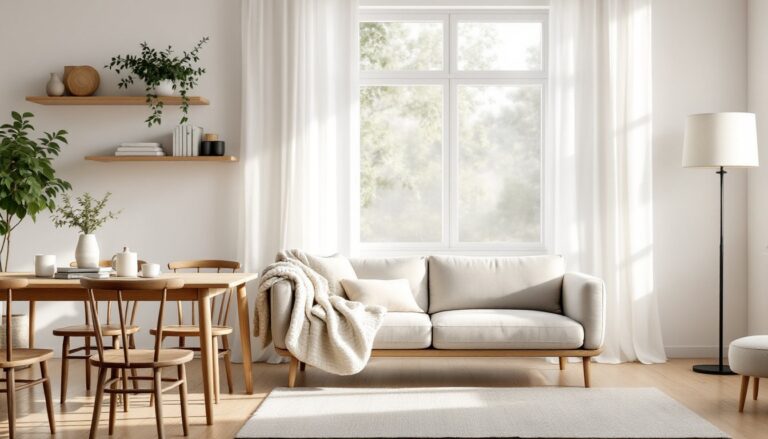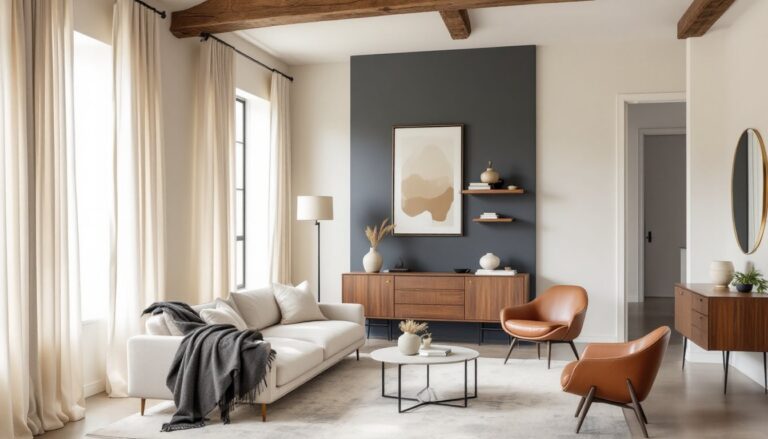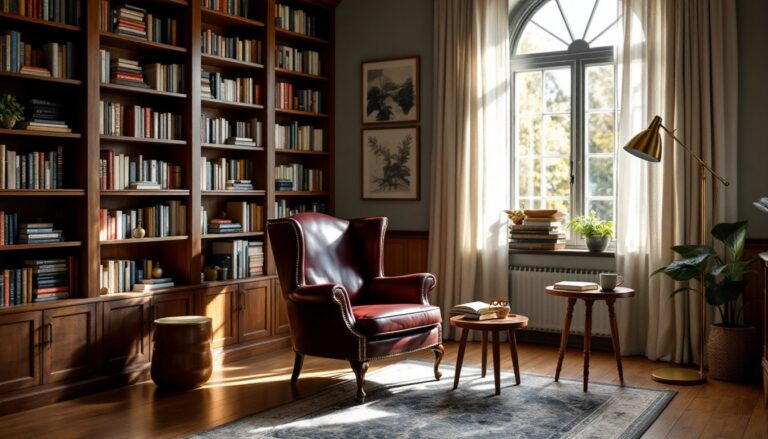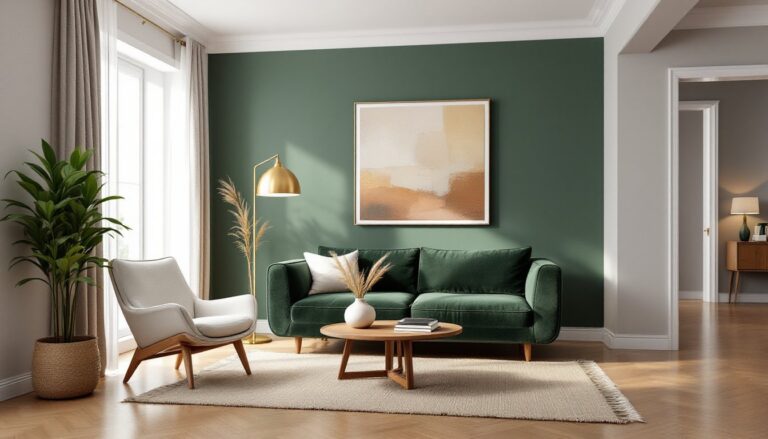
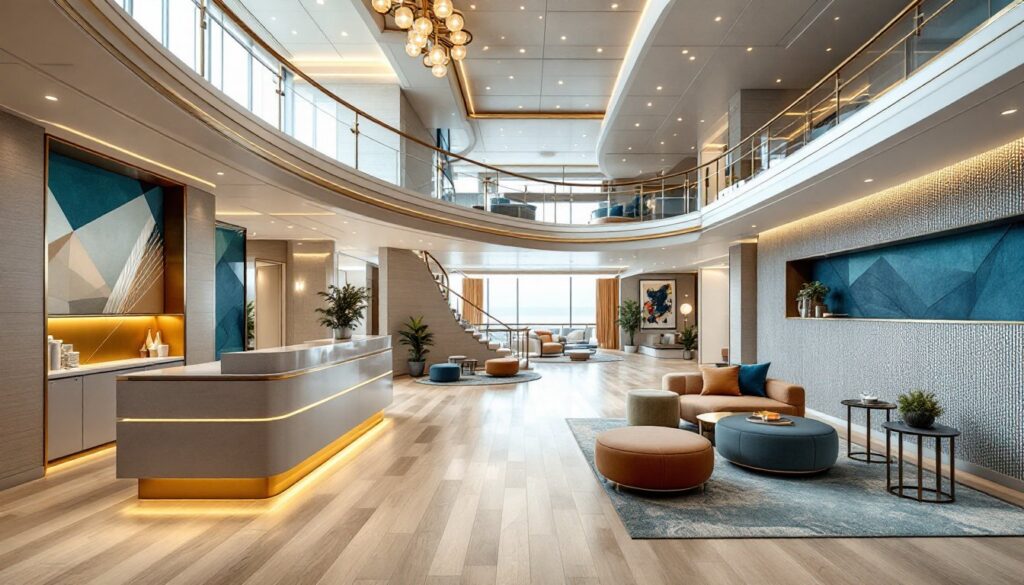
Cruise ship designers face a unique challenge: creating spaces that feel expansive and luxurious while maximizing every square inch of usable area. The result is a sophisticated blend of high-traffic durability, space optimization, and visual appeal that’s refined over decades of engineering and passenger feedback. For homeowners dealing with tight quarters, wear-and-tear from active families, or a desire for that polished “resort” aesthetic, cruise ship interior design offers surprisingly practical takeaways. This isn’t about slapping anchors on throw pillows, it’s about understanding how maritime designers solve real problems with materials, layouts, and color strategies that translate beautifully to residential projects.
Table of Contents
ToggleKey Takeaways
- Cruise ship interior design maximizes small spaces through built-in storage, mirrors, and multi-functional furniture that prevent the cramped feeling common in compact homes.
- Marine-grade materials like luxury vinyl plank, solid-surface countertops, and solution-dyed acrylics provide durability against moisture and heavy use, making them ideal for bathrooms, kitchens, and high-traffic areas.
- Layered lighting—combining ambient, task, and accent sources—creates depth and visual interest in limited square footage, while clean lines and minimal ornamentation prevent visual clutter.
- Sophisticated nautical color palettes use warm grays, saturated teals, and brushed metallic finishes rather than literal anchors and stripes to evoke maritime elegance without appearing kitschy.
- Cruise ship interior design succeeds by prioritizing timeless materials and restrained aesthetics over trendy elements, ensuring investments like flooring and cabinetry remain fresh for 10–15 years.
- Common mistakes to avoid include oversized furniture that blocks circulation, ignoring moisture management in wet areas, and adding structural features without professional engineering consultation.
What Makes Cruise Ship Interior Design So Captivating?
Modern cruise ship interiors succeed because they balance competing priorities: durability for constant use, aesthetic appeal that photographs well, and spatial efficiency that doesn’t feel cramped. Unlike residential design, where trends shift every few years, cruise lines invest in interiors that must look fresh for 10-15 years while withstanding salt air, humidity swings, and thousands of passengers weekly.
The captivating quality comes from intentional layering. High-end vessels use dramatic focal points, custom light fixtures, statement walls with textured panels, or floor-to-ceiling windows, to draw the eye upward and outward. This creates visual interest without cluttering horizontal surfaces, a technique that works equally well in a narrow hallway or a small living room.
Another factor is restrained luxury. Cruise designers avoid overly thematic or trendy elements that date quickly. Instead, they rely on timeless materials like brushed metal, tempered glass, and neutral upholstery with pops of saturated color in artwork or accent pieces. The effect feels curated rather than cookie-cutter, and it’s achieved through disciplined material selection rather than excessive ornamentation.
Key Design Elements Found in Modern Cruise Ship Interiors
Cruise ship design prioritizes function without sacrificing style. The techniques used onboard translate directly to residential applications, especially in smaller homes, condos, or high-traffic areas.
Space-Maximizing Techniques from Cruise Ship Cabins
Cruise ship cabins average 150-180 square feet for interior staterooms, yet they comfortably accommodate sleeping, storage, and grooming for two people. The secret lies in multi-functional furniture and vertical thinking.
Built-in storage is king. Rather than freestanding dressers, cruise cabins use floor-to-ceiling closets with adjustable shelving, under-bed drawers on full-extension slides, and recessed niches for toiletries. Homeowners can replicate this by installing closet organizer systems (wire shelving won’t cut it, use melamine or plywood with edge banding for a finished look) and spec’ing furniture with hidden storage compartments.
Mirrors are deployed strategically to reflect light and visually double space. A full-height mirror on a closet door or behind a headboard makes a room feel broader. Pair this with LED strip lighting tucked under shelves or behind headboards (24V systems are safer and more versatile than 120V for DIY installs) to eliminate dark corners.
Fold-down or pocket elements save square footage. Murphy beds, fold-down desks, and sliding barn doors (on soft-close hardware to avoid slamming in rough seas, or in homes with kids) free up circulation space. If installing a barn door, make sure to use a header beam rated for the door weight and verify wall studs can support the track’s shear load.
For compact living solutions, these techniques prevent the “storage unit” look that plagues small spaces when residents resort to freestanding bins and open shelving.
Durability Meets Aesthetics: Material Choices That Last
Cruise ships operate 24/7 in corrosive saltwater environments with constant foot traffic. Materials must meet IMO (International Maritime Organization) fire-resistance standards and withstand humidity without warping, fading, or harboring mold. Homeowners dealing with high-moisture areas (bathrooms, basements, coastal climates) or heavy use (entryways, kitchens, kids’ rooms) can borrow from this playbook.
Luxury vinyl plank (LVP) and rigid core flooring dominate cruise ship installations. They’re 100% waterproof, dent-resistant, and available in convincing wood or stone patterns. When shopping, look for wear layers of 12 mil or thicker and attached underlayment for sound dampening. Installation is straightforward: acclimate planks for 48 hours, ensure subfloors are flat within 3/16″ over 10 feet, and use a tapping block and pull bar for click-lock systems.
Laminate and solid-surface countertops (like Corian or quartz) resist staining and require zero sealing, unlike natural stone. Cruise galleys and bars use these materials because they can be thermoformed into seamless shapes with integrated backsplashes, reducing joints where water and grime collect. For DIY installs, solid-surface materials require specialized tools (routers with carbide bits, belt sanders), but laminate can be cut with a circular saw fitted with a fine-tooth blade (80 teeth or more) to minimize chipping.
Marine-grade upholstery fabrics, often solution-dyed acrylics or polyesters, resist UV fading, mildew, and stains from spills. Brands like Sunbrella aren’t just for outdoor cushions: they work beautifully for indoor dining chairs or sofa slipcovers in homes with pets or young kids. These fabrics can be cleaned with diluted bleach (10:1 water-to-bleach ratio) without color loss.
Metal finishes onboard are typically powder-coated aluminum or stainless steel to prevent rust. Homeowners in humid or coastal areas should avoid raw iron hardware or oil-rubbed bronze (which tarnishes quickly) in favor of brushed nickel, chrome, or powder-coated options.
How to Bring Cruise Ship Design Into Your Home
Translating cruise ship aesthetics to residential spaces requires editing. The goal is to capture the sophisticated, uncluttered vibe without creating a literal “boat” theme.
Start with clean lines and built-ins. Cruise interiors avoid fussy molding or ornate trim. Baseboards are often simple 3-4″ MDF profiles, and cabinetry uses slab or shaker-style doors with concealed hinges. If updating trim, remove dated colonial-style casing and replace with modern 2-1/4″ casing (or go frameless for a true minimalist look). Caulk seams with paintable acrylic latex caulk and use a sanding sponge (220-grit) between primer and topcoat for a factory-smooth finish.
Integrated lighting is non-negotiable. Cruise ships layer ambient (recessed ceiling cans), task (under-cabinet LEDs), and accent (picture lights, cove lighting) to create depth. DIYers can retrofit recessed lighting with 4″ or 6″ LED retrofit kits that install without cutting new ceiling holes, just screw into existing sockets. For under-cabinet lighting, hardwired LED strips look cleaner than plug-in puck lights: run 14/2 Romex from a switched outlet (turn off breaker first, verify with a non-contact voltage tester, and if you’re not comfortable with electrical work, hire a licensed electrician).
Monochromatic or limited color schemes prevent visual chaos in small areas. Cruise designers might use a base of soft grays or taupes with a single accent color (navy, teal, burnt orange) repeated in 3-5 elements, artwork, throw pillows, a rug. Paint walls and trim the same color in different sheens (eggshell for walls, semi-gloss for trim) to blur boundaries and make rooms feel larger.
For a touch of contemporary design inspiration, consider textured accent walls using materials like 3D wall panels (PVC or MDF options start around $3-5 per square foot), shiplap (install horizontally with a nickel or quarter spacer for consistent gaps), or large-format tile (12″x24″ or larger reduces grout lines). Always prep walls first: patch holes with lightweight spackle, prime with a stain-blocking primer if covering dark colors, and use a 4-foot level to establish your starting line.
Creating a Nautical Color Palette That Works on Land
Nautical color schemes fail when they rely too heavily on literal navy-and-white stripes or red accents that scream “beach house gift shop.” Cruise ships use maritime-inspired palettes that feel sophisticated, not thematic.
Base neutrals include warm grays (greige tones like Sherwin-Williams Repose Gray or Benjamin Moore Revere Pewter), soft whites with gray undertones (avoid stark whites, which feel sterile), and sandy beiges. These provide a calm backdrop that won’t compete with furnishings.
Accent blues and greens should be saturated but not primary-crayon bright. Think deep teals (like the color of tropical shallows), slate blues, or seafoam greens. Use these on a single feature wall, in artwork, or in textiles. Test paint samples on poster board (not directly on walls) and view them in morning, midday, and evening light before committing to a gallon.
Metallic finishes, brushed brass, polished chrome, or oil-rubbed bronze (if kept dry), add warmth without color. Swap out builder-grade satin nickel door handles and cabinet pulls for coordinating finishes throughout a room (mixing metals works, but limit it to two finishes max).
Natural textures ground the palette. Jute rugs, linen drapes, and wood furniture in light or medium tones (oak, ash, or painted finishes) prevent the space from feeling cold. When selecting area rugs, choose low-pile or flatweave styles (easier to vacuum and less likely to trap moisture in humid areas). Anchor rugs with non-slip rug pads cut 1-2″ smaller than the rug perimeter to prevent bunching.
For additional strategies on small-space transformations, consider how layering textures, rather than adding more color, creates visual interest without overwhelming limited square footage.
Common Mistakes to Avoid When Using Maritime-Inspired Decor
The line between “refined nautical” and “kitschy beach shack” is thinner than most people realize. Here’s what to avoid.
Overusing literal nautical symbols. Anchors, ship wheels, rope accents, and sailboat prints are fine in extreme moderation (one piece per room, max), but they quickly veer into theme-park territory. Cruise ships themselves rarely use these motifs, they imply the ocean through color, materials, and clean design, not literal iconography.
Ignoring scale and proportion. Cruise ship furniture is deliberately compact and low-profile to maximize headroom and circulation. Homeowners often make the mistake of importing oversized sectionals or bulky armoires into small rooms. Measure before you buy: sofas should leave at least 30-36″ of walkway clearance, and coffee tables should sit 14-18″ from seating for comfortable legroom. Use painter’s tape on the floor to mock up furniture footprints before hauling anything inside.
Skimping on lighting. Cruise interiors feel airy partly because of abundant, layered lighting. A single overhead fixture won’t cut it. Budget for multiple light sources per room: ceiling fixtures on dimmers, table or floor lamps for task lighting, and accent lighting (LED strips, picture lights) for depth. When installing dimmers, make sure they’re LED-compatible (older dimmer switches cause LEDs to flicker or hum).
Choosing trendy over timeless. Cruise lines avoid design fads because refits are expensive and disruptive. Homeowners should adopt the same mindset for big-ticket items like flooring, cabinetry, and tile. Save trendy colors or patterns for easily swappable elements, throw pillows, artwork, or accent walls that can be repainted in a weekend.
Neglecting moisture management. Cruise ships use aggressive HVAC systems and materials that laugh at humidity. Residential bathrooms, basements, and laundry rooms need similar care. Install exhaust fans rated for the room’s cubic footage (CFM = room square footage × ceiling height × 7.5, divided by 60), run them during and for 20 minutes after showers, and use mold-resistant drywall (purple board or green board) in wet areas. Caulk seams around tubs and sinks with 100% silicone caulk (not acrylic latex, which breaks down in constant moisture), and re-caulk every 2-3 years or when you see gaps.
Forgetting about structural realities. Homeowners inspired by modern architectural features sometimes want to remove walls or install large windows without understanding load-bearing considerations. Any wall running perpendicular to floor joists or sitting directly above a basement beam is likely load-bearing and requires a structural engineer’s consultation and permits before removal. Window enlargements often require headers (LVL or engineered lumber beams) sized according to span and load. Don’t guess, hire a pro for structural changes.
Overlooking sound control. Cruise cabins use soundproofing (acoustic insulation, solid-core doors, rubber underlayment) to minimize noise between rooms. Homeowners in multi-story homes or shared walls can improve privacy by adding acoustic batts (Rockwool or fiberglass) in stud bays during renovations, installing solid-core doors (1-3/4″ thick), and using rubber underlayment (2mm or thicker) beneath hard flooring. These upgrades are far easier during construction than as afterthoughts.
By respecting the practical engineering behind cruise ship design, space efficiency, material durability, and restrained aesthetics, homeowners can create interiors that feel polished and functional without crossing into nautical novelty. The best maritime-inspired spaces don’t announce their influence: they simply work better and look sharper than conventional approaches.