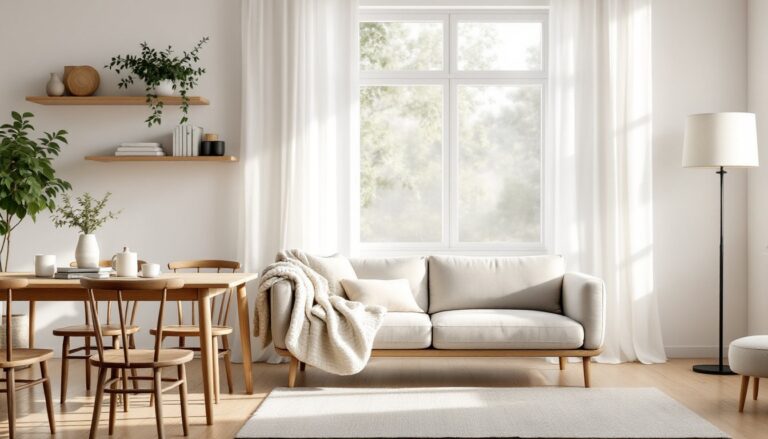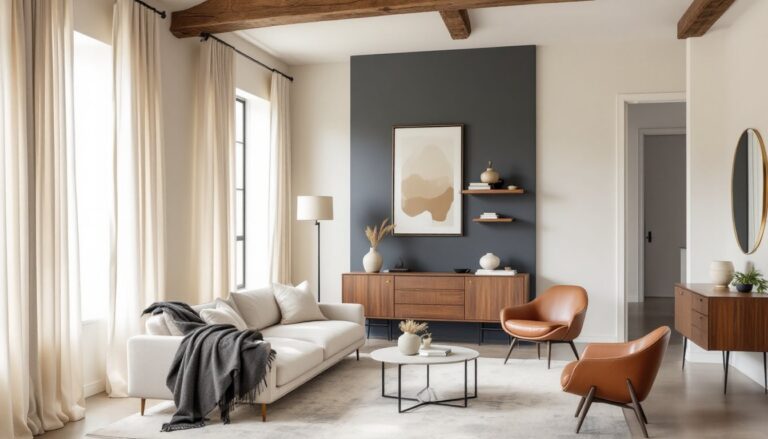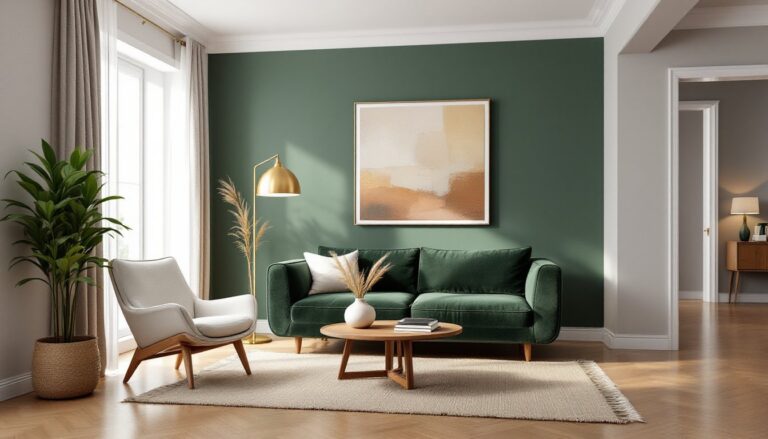
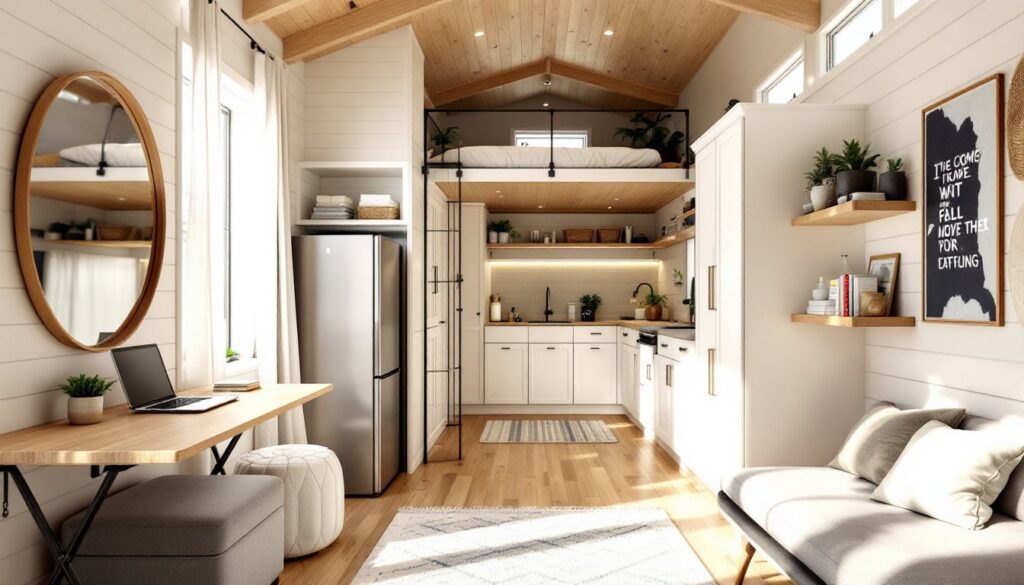
Tiny house living isn’t just a trend anymore, it’s a full-blown movement. But cramming your life into 400 square feet or less takes more than downsizing: it demands smart design choices that make every inch count. Unlike traditional homes where you can throw an extra chair in the corner or stash seasonal gear in the basement, tiny houses punish wasted space. The difference between claustrophobic and comfortable comes down to how well you design the interior. This guide walks through practical strategies to make a tiny house feel livable, functional, and, dare we say it, spacious.
Table of Contents
ToggleKey Takeaways
- Tiny house interior design requires vertical thinking and multi-functional furniture rather than traditional horizontal space planning, fundamentally changing how every piece is selected and placed.
- Murphy beds, expandable dining tables, and storage ottomans maximize usable floor space in tiny homes by serving dual purposes and adapting to daily needs.
- Light colors, layered artificial lighting, mirrors, and strategic natural light placement visually expand small spaces without requiring structural changes.
- Vertical storage, pegboard walls, and hidden compartments eliminate clutter and prevent the accumulation that quickly overwhelms compact living areas.
- Traffic flow, functional zoning with rugs and lighting, and careful loft placement must be planned before construction since post-build modifications in tiny houses are costly and disruptive.
Why Tiny House Interior Design Requires a Different Approach
Traditional interior design assumes you have space to work with. Tiny house design flips that assumption on its head. When your entire footprint sits somewhere between 100 and 400 square feet, every design decision has consequences. Put a full-size couch in the wrong spot, and you’ve just blocked your path to the bathroom.
The core challenge is vertical thinking. Most people design horizontally, placing furniture along walls, arranging rooms side-by-side. Tiny houses force you upward. Loft beds, ceiling-mounted storage, and tall shelving units become essential, not optional. You’re building in three dimensions, not two.
Another shift: elimination of single-purpose items. A dining table that doesn’t fold down or convert into a workspace is a luxury tiny house dwellers can’t afford. Same goes for a couch that’s just a couch, or a bed frame with no storage underneath. Every piece needs to justify the real estate it occupies.
Finally, there’s the spatial psychology factor. Small spaces can feel either cozy or cramped depending on sight lines, color choices, and how you zone different areas. Getting this wrong turns a tiny house into a glorified closet. Getting it right creates a home that feels intentional and surprisingly roomy.
Space-Saving Furniture Solutions for Tiny Homes
Furniture selection makes or breaks a tiny house interior. Standard residential pieces are sized for homes with square footage to spare. In a tiny house, you need furniture designed, or modified, to compress, fold, or stack.
Murphy beds remain the gold standard for space efficiency. Wall-mounted versions free up 25-30 square feet of floor space during the day. Modern designs include integrated shelving or fold-down desks, turning a bedroom into a living area with one motion. Installation requires solid blocking in the wall framing, usually 2×6 or 2×8 blocking between studs, to support the load (typically 200-300 pounds when occupied).
Expandable dining tables solve the eat-in kitchen puzzle. Look for drop-leaf designs or tables with slide-out extensions. A 24-inch-wide table works for daily meals: extend it to 48 inches when you have guests. Pair it with folding chairs or stools that nest under the table.
Storage ottomans and benches provide seating plus hidden compartment space. Choose designs with lift-off tops rather than hinged lids, they’re easier to access when pushed against a wall. These work especially well for storing seasonal clothing, linens, or rarely used kitchen gear.
For compact appliances, consider combination units. A washer-dryer combo occupies half the space of separate machines. Induction cooktops can be stored in a drawer when not in use. Under-counter refrigerators (24 inches wide) provide adequate cooling for 1-2 people while preserving counter workspace.
Multi-Functional Pieces That Work Double Duty
The best tiny house furniture serves at least two purposes. Here’s where to focus:
Sofa beds with storage: Skip the traditional pullout couch, the mattress is always terrible, and the mechanism eats interior space. Instead, look for platform sofas where the seat cushions lift to reveal storage, and the back cushions rearrange to form a sleeping surface. Futons work too, but choose one with a solid hardwood frame (not particle board) and a real mattress, not just a pad.
Staircase storage: If your tiny house has a loft, the staircase offers 15-25 cubic feet of potential storage. Each tread can be a drawer, or the entire structure can be built as a cabinet with doors. This beats a ladder for safety and functionality. Just make sure treads are at least 10 inches deep to meet residential stair code (though tiny houses on wheels often fall outside IRC jurisdiction).
Fold-down wall desks: A workspace doesn’t need to occupy permanent floor space. Wall-mounted desks fold flat when not in use, projecting only 2-3 inches from the wall. Add a fold-down leg or chain support rated for at least 50 pounds to handle a laptop and work materials. Companies like IKEA offer hackable wall units that DIYers modify for custom sizes.
Nesting furniture: Side tables that stack, stools that tuck under a counter, or pots and pans designed to nest inside each other all follow the same principle, compress when not in use. This matters most in kitchens and living areas where you need flexibility.
Color and Lighting Strategies to Make Small Spaces Feel Larger
Paint and light are the cheapest ways to manipulate perceived space. Use them wrong, and a tiny house feels like a cave. Use them right, and you can visually add square footage that doesn’t exist.
Light colors reflect light, making walls recede. Whites, soft grays, and pale blues are standard choices for a reason, they work. But you’re not limited to builder-grade white. Consider warm off-whites (with beige or yellow undertones) to avoid the sterile look. One gallon of interior paint covers approximately 350-400 square feet, so you can repaint an entire tiny house interior with 2-3 gallons.
Avoid dark accent walls in tiny spaces unless you’re deliberately creating a cozy nook. Dark colors absorb light and visually advance, shrinking the room. If you want color, bring it in through textiles, artwork, or a single piece of furniture, not an entire wall.
Natural light is non-negotiable. Maximize window size where possible, especially on the long walls. South-facing windows provide consistent daylight without harsh glare (in the Northern Hemisphere). If privacy is a concern, use sheer curtains or top-down/bottom-up shades that let light in while blocking sight lines.
Layered artificial lighting prevents the single-bulb-in-the-ceiling problem. Use a mix of:
- Task lighting: Under-cabinet LEDs in the kitchen, reading lamps near seating
- Ambient lighting: Ceiling-mounted fixtures or recessed cans (check headroom, most require 6-8 inches of clearance above the ceiling)
- Accent lighting: Small sconces or strip lights to highlight architectural features
LED strips work especially well in tiny houses. They draw minimal power (important if you’re off-grid or solar-powered), generate almost no heat, and install with adhesive backing. Run them under shelves, along toe kicks, or behind mirrors to create indirect light that makes spaces feel larger.
Mirrors strategically placed opposite windows bounce light deeper into the space. A mirror on a narrow wall visually widens the room. Just don’t overdo it, too many mirrors feel like a funhouse.
Clever Storage Ideas That Eliminate Clutter
Clutter kills tiny house living faster than anything else. Without dedicated storage systems, stuff migrates to counters, floors, and furniture surfaces. Within a week, you’re living in chaos.
Vertical storage is your friend. Floor-to-ceiling shelving units use space that would otherwise be wasted. In most tiny houses with standard 8-foot walls (actual interior height around 7’6″ after framing and finishes), you can fit five or six shelf levels. Use the top shelves for rarely accessed items, holiday decorations, archived paperwork, off-season gear.
Magnetic strips in the kitchen keep knives and metal utensils off the counter and out of drawers. Mount them on the wall or inside cabinet doors. Same principle works in a workshop area for screwdrivers, pliers, and other steel tools.
Pegboard walls offer customizable storage in garages, workshops, or mudroom areas. A 4×8 sheet of 1/4-inch pegboard costs $15-25 and can hold 50+ pounds when properly mounted to studs or furring strips. Rearrange hooks and shelves as your needs change.
Ceiling-mounted racks work for bikes, seasonal sporting equipment, or even pots and pans. Use heavy-duty hooks screwed into ceiling joists (locate them with a stud finder, they’re typically 16 inches on center in residential framing). Each hook should be rated for at least twice the weight you plan to hang.
Current organizing strategies emphasize the “one in, one out” rule for tiny spaces. Bring in a new item, and something else leaves. It’s harsh, but it prevents accumulation.
Hidden storage behind panels takes advantage of wall depth. Between studs (typically 3.5 inches deep with 2×4 framing), you can recess shallow shelves for spices, toiletries, or cleaning supplies. Cut an access panel in drywall, frame it with trim, and add a magnetic latch.
Under-stair storage has already been mentioned, but don’t forget under-floor storage in tiny houses on trailers. Some builders design removable floor sections that reveal compartment space above the trailer frame. Good for tools, emergency supplies, or anything you don’t need daily access to.
Layout and Zoning Tips for Tiny House Living
Layout mistakes in a tiny house compound every day you live there. Fix them before you move in, because rearranging walls or plumbing later is exponentially harder.
Define functional zones even without walls. Use rugs, lighting changes, or level shifts (a raised platform for the sleeping area, for example) to signal different purposes. Your brain needs spatial cues to distinguish “kitchen” from “bedroom” when they’re eight feet apart.
The kitchen work triangle (sink, stove, refrigerator) still applies, just compressed. Aim for 4-6 feet between points instead of the traditional 9 feet. Galley-style kitchens work well in narrow tiny houses, place appliances and counter space along one or both long walls. Many efficient kitchen layouts translate down to tiny house scale with minor adjustments.
Traffic flow matters more in tight quarters. Ensure there’s a clear path from the entrance to the bathroom without navigating around furniture. A 30-inch-wide pathway is the minimum: 36 inches is better. If someone’s cooking, can another person reach the bathroom without asking them to move? If not, rethink the layout.
Loft placement in tiny houses typically goes above the bathroom or kitchen, areas with lower ceiling requirements. Most people can tolerate a 3-4 foot ceiling height in a sleeping loft if they’re only up there to sleep. But don’t cut it too tight: you need enough clearance to sit up in bed comfortably (at least 42 inches for most adults).
Bathroom location should be near the entry if possible. This minimizes plumbing runs (cheaper, fewer leak points) and keeps bathroom traffic out of living spaces. A wet bath (shower, toilet, and sink all in one waterproof room) occupies as little as 25 square feet and eliminates the need for a separate shower enclosure.
Creating cozy interior zones with textiles, a rug under the dining area, curtains around a sleeping nook, adds psychological separation without building walls. It’s the same principle designers use in studio apartments, scaled down further.
Conclusion
Tiny house interior design isn’t about making do with less, it’s about designing smarter from the start. Prioritize multi-functional furniture, maximize vertical storage, and use light and color to visually expand tight quarters. Get the layout right before you commit, because moving a bathroom or kitchen after the build is expensive and miserable. Every decision counts when you’re working with 300 square feet, but nail the fundamentals, and a tiny house can feel more livable than a poorly designed conventional home twice its size.