Designing a medical office isn’t like furnishing a living room. Get it wrong, and you’ve got anxious patients, stressed staff, and exam rooms that feel like storage closets. Get it right, and the space itself becomes a tool, calming nerves, streamlining workflow, and even supporting recovery. Whether you’re a healthcare provider planning a renovation or a designer tackling your first clinic, the principles are the same: prioritize function without sacrificing comfort, use materials that can take a beating, and remember that every square foot either helps or hinders care. This isn’t about trends or Pinterest-worthy accent walls. It’s about creating environments where people feel safe and professionals can do their jobs efficiently.
Table of Contents
ToggleKey Takeaways
- Medical office interior design directly impacts patient outcomes, reducing anxiety by up to 30% and lowering staff turnover through thoughtful planning of layout, colors, and materials.
- Well-designed waiting rooms with seating clusters, soft color palettes (blues and greens), layered lighting, and acoustic treatments create a calming first impression that builds patient trust.
- Exam room design must balance patient comfort with clinical functionality by ensuring adequate clearances (12×14 feet minimum), wall-mounted storage, and organized tool placement within 24-30 inches of the exam table.
- Durable, cleanable materials are non-negotiable in medical offices—use luxury vinyl flooring, hospital-grade scrubbable paint, solid-surface countertops, and medical-grade vinyl upholstery to meet safety and infection control standards.
- Lighting, acoustics, and air quality are critical operational elements: aim for 4000K color-accurate LED lighting in exam rooms, acoustic ceiling tiles rated 0.70+ NRC, and a minimum of 6 air changes per hour with MERV 13 filters for infection control.
Why Medical Office Interior Design Matters More Than You Think
Medical office design directly impacts patient outcomes and operational efficiency. Research shows that well-designed healthcare environments can reduce patient anxiety by up to 30%, lower staff turnover, and even shorten recovery times.
The waiting room sets the tone before a patient even sees a provider. Hard plastic chairs under fluorescent lighting send a different message than padded seating in a space with natural light and sound-absorbing materials. First impressions shape patient trust, and trust influences everything from appointment adherence to how honestly someone describes symptoms.
Staff efficiency is equally affected. Exam rooms with poor layouts force nurses and doctors to waste time hunting for supplies or navigating awkward furniture arrangements. A well-planned medical office reduces steps, minimizes distractions, and keeps critical tools within arm’s reach. That’s not luxury, it’s operational necessity.
Accessibility isn’t optional. The Americans with Disabilities Act (ADA) requires specific clearances, door widths, and grab bar placements in medical facilities. Beyond code compliance, thoughtful design accommodates walkers, wheelchairs, visual impairments, and mobility challenges without making anyone feel like an afterthought.
Safety and infection control also hinge on design choices. Smooth, non-porous surfaces are easier to disinfect. Hands-free fixtures reduce cross-contamination. Proper ventilation and material selection can limit pathogen spread, critical lessons reinforced by recent public health events.
Essential Design Principles for Medical Office Spaces
Medical office design balances three core demands: patient comfort, clinical functionality, and regulatory compliance. Every decision, from layout to furniture, should serve at least two of those three.
Creating a Calming Waiting Room Experience
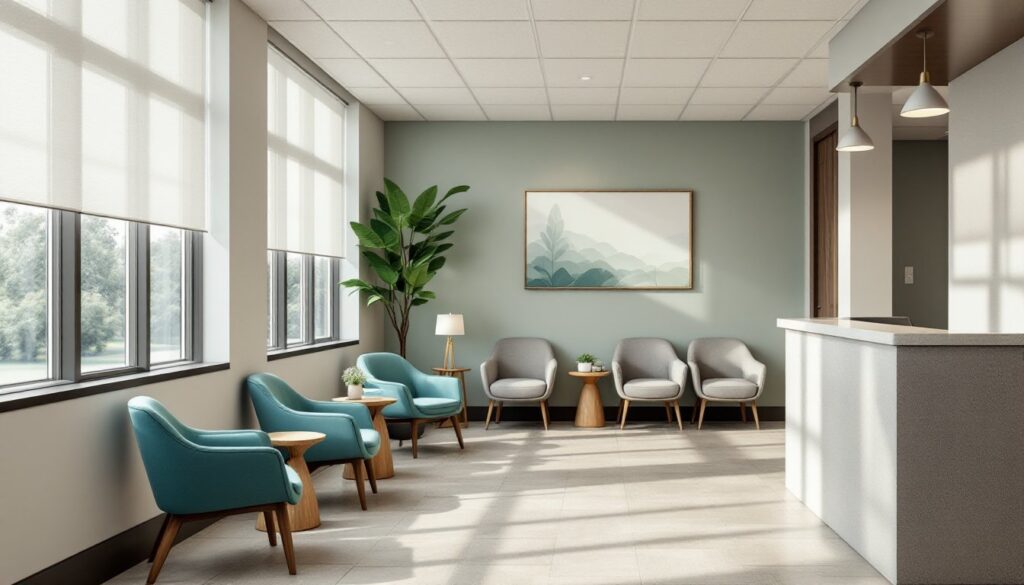
Waiting rooms are where anxiety builds or dissipates. Start with seating that respects personal space. Avoid the airport-style bench lineup. Instead, use clusters of 2-4 chairs with small side tables, allowing patients to maintain comfortable distance.
Color matters here more than anywhere else in the office. Soft blues, greens, and warm neutrals lower blood pressure and heart rate compared to stark whites or aggressive reds. If the existing walls are institutional beige, low-VOC paint in a muted sage or soft gray makes an immediate difference without off-gassing harsh chemicals.
Lighting should layer. Overhead LED panels (3000-3500K color temperature) mimic daylight without the harsh glare of older fluorescents. Add table lamps or wall sconces in seating areas to create zones of warmth. Natural light is ideal, if windows exist, skip heavy drapes in favor of adjustable blinds or solar shades that control glare without blocking views.
Sound absorption often gets overlooked. Hard surfaces bounce noise, amplifying every cough, phone call, and door slam. Acoustic ceiling tiles (NRC rating of 0.70 or higher) dramatically reduce ambient noise. Wall-mounted fabric panels or even strategically placed plants help further. Designers working on small commercial spaces often use similar acoustic strategies to manage noise in tight quarters.
Distraction is therapeutic. Provide reading material, but also consider aquariums, art with nature themes, or even a simple water feature. Research from design professionals confirms that biophilic elements, natural materials, plants, and water, measurably reduce stress in healthcare settings.
Optimizing Exam Rooms for Function and Comfort
Exam rooms fail when they prioritize one user over the other. The patient shouldn’t feel like they’re sitting in a supply closet, and the provider shouldn’t have to contort around furniture to reach equipment.
Start with clearances. The ADA requires a minimum 60-inch turning radius for wheelchair access, but a comfortable exam room should offer more. Aim for 10 x 12 feet minimum: 12 x 14 feet is better if space allows.
Place the exam table against a wall, not in the center. This leaves floor space open and creates a clear workflow path. Mount frequently used items, otoscopes, blood pressure cuffs, thermometer holders, on the wall within 24-30 inches of the exam table. Every step a provider takes to grab a tool is a step that slows care.
Storage should be built-in wherever possible. Rolling carts look temporary and eat floor space. Wall-mounted cabinets with smooth, cleanable fronts keep supplies organized and surfaces clear. Choose thermofoil or solid-surface cabinet doors, both wipe down easily and resist moisture better than wood veneer.
Seating isn’t just for the patient. Include a second chair or small stool for family members or interpreters. It’s a small detail that signals respect and accommodates real-world appointments.
Privacy and dignity matter. Mount a privacy curtain or install a solid screen near the exam table, even if the room has a door. Patients change clothes here, and a simple hospital-grade privacy curtain on a ceiling track costs under $150 and makes a significant comfort difference.
Color Psychology and Material Selection for Healthcare Settings
Color isn’t decoration in a medical office, it’s a tool. Blues and greens reduce anxiety and are associated with cleanliness and calm, which is why they dominate hospitals. Warm neutrals (taupes, soft grays) feel less clinical without sacrificing professionalism. Avoid stark white walls: they can increase eye strain under artificial lighting and feel sterile rather than clean.
Accent colors should be intentional. A muted teal or sage in a pediatric area feels friendly without being overstimulating. In geriatric or cardiology practices, deeper, grounded tones, warm grays, soft blues, convey stability. Bright reds, oranges, and yellows can increase heart rate and agitation: save them for small doses in children’s play areas, not exam rooms.
Material selection in medical offices must meet three non-negotiables: durability, cleanability, and safety. Flooring takes the hardest abuse. Luxury vinyl tile (LVT) or sheet vinyl are the workhorses, waterproof, easy to disinfect, and comfortable underfoot for staff spending eight-hour shifts on their feet. Avoid carpet except in private consultation offices: it harbors allergens and pathogens.
Wall surfaces should be smooth and non-porous. Scrubbable paint (look for products labeled “hospital-grade” or with a scrub rating above 2,500 cycles) handles repeated cleaning with bleach-based disinfectants. In high-traffic areas or around sinks, consider fiber-reinforced plastic (FRP) panels or porcelain tile, both are nearly indestructible and wipe clean.
Countertops and work surfaces see constant contact. Solid-surface materials (like Corian) resist stains and bacteria, have no grout lines to harbor germs, and can be repaired if scratched. Quartz is another excellent option, harder than solid surface and equally non-porous. Avoid laminate in clinical areas: the seams and edges trap moisture and degrade under harsh cleaners. Those exploring similar commercial material needs can review strategies used in budget-conscious commercial interiors for insight on balancing cost and durability.
Fabrics must be medical-grade. Waiting room chairs and exam room seating should use vinyl or polyurethane upholstery, both wipe clean and meet fire codes. If fabric is used in administrative or consultation areas, specify antimicrobial treatments and stain-resistant finishes. Replace any furniture with visible tears or cracks immediately: they’re impossible to disinfect properly.
Lighting, Acoustics, and Air Quality Considerations
Lighting in medical offices does heavy lifting. Exam rooms need bright, color-accurate lighting (CRI of 90 or higher) so providers can assess skin tone, wound color, and other visual cues. LED panels or ceiling-mounted fixtures rated at 4000K provide clear, clinical light without the yellow cast of older bulbs.
Dimmer switches add flexibility. Not every exam requires surgical-level brightness, and the ability to lower lights during sensitive conversations or procedures respects patient comfort. In waiting areas and hallways, 3000-3500K lighting feels warmer and less institutional.
Natural light improves both patient and staff well-being, but it requires control. Direct sun creates glare on computer screens and fades fabrics. Use solar shades or adjustable blinds to diffuse light without blocking it entirely. If adding windows isn’t an option, consider daylight-spectrum LEDs or even light therapy panels in staff break rooms.
Acoustics are critical in medical settings where privacy is legally required. The Health Insurance Portability and Accountability Act (HIPAA) doesn’t specify soundproofing standards, but patient conversations must remain confidential. Start with doors: solid-core doors block significantly more sound than hollow-core. Add door sweeps or seals to close the gap at the threshold.
Ceiling tiles matter. Standard commercial tiles have an NRC (Noise Reduction Coefficient) of around 0.50. Medical offices should use tiles rated 0.70 or higher. For consultation rooms or areas where sensitive conversations happen, add wall-mounted acoustic panels. They’re available in fabric-wrapped or paintable options that blend into the design.
White noise or sound masking systems are worth considering for practices handling mental health, fertility, or other sensitive specialties. These systems emit a low-level background sound that obscures conversation without being intrusive. Installation is straightforward, most tie into existing ceiling speaker infrastructure. Professionals evaluating overall spatial planning principles will recognize the overlap between architectural solutions and interior detailing.
Air quality directly impacts infection control and patient comfort. The American Society of Heating, Refrigerating and Air-Conditioning Engineers (ASHRAE) recommends a minimum of 6 air changes per hour (ACH) in medical exam rooms: higher-risk areas like procedure rooms need 15 ACH or more. This isn’t a DIY install, HVAC modifications in medical settings often require permits and professional engineering review.
Filtration should use MERV 13 filters or higher to capture airborne particles, including viruses and bacteria. UV-C germicidal lights in ductwork add another layer of pathogen control but require professional installation and maintenance.
Humidity control prevents mold and supports respiratory comfort. Target 30-50% relative humidity. Anything higher encourages microbial growth: anything lower dries out mucous membranes and increases susceptibility to infection. Many home design enthusiasts exploring environmental comfort will find similar humidity targets recommended for residential wellness.
Conclusion
Medical office design isn’t about making a statement, it’s about supporting care. Every choice, from paint sheen to chair height, either helps patients feel at ease and providers work efficiently, or it doesn’t. Focus on durable, cleanable materials, prioritize accessibility and acoustics, and remember that good design in healthcare is invisible. Patients shouldn’t notice the lighting or the flooring: they should just feel a little less anxious and a little more cared for.