Home elevators have evolved from purely functional installations into design opportunities that rival any room in the house. A well-designed elevator cab isn’t just transportation, it’s a curated vertical gallery that greets residents and guests dozens of times daily. Whether installing a new residential lift or upgrading an existing one, the interior finishes deserve the same attention as a primary bathroom or custom kitchen. Thoughtful material selection, lighting, and detailing transform a 15-square-foot box into an experience that enhances property value and daily living.
Table of Contents
ToggleKey Takeaways
- Luxury elevator interior design transforms a utilitarian space into a curated vertical gallery that enhances property value and reinforces your home’s aesthetic narrative.
- Material selection is critical—hardwoods, exotic veneers, natural stone, and metals should be limited to 2-3 complementary options to avoid visual chaos in compact elevator cabs.
- Strategic lighting through recessed LEDs, cove lighting, and backlit panels creates ambiance while serving essential task and safety functions in residential elevators.
- Design cohesion requires extending your home’s style into the elevator through matching flooring, ceiling treatments, custom millwork, and coordinated handrails and control panels.
- All elevator interior modifications must be verified with the manufacturer and local building officials to ensure compliance with fire ratings, weight limits, and ASME A17.1 safety codes.
Why Luxury Elevator Design Matters in Modern Homes
First impressions form within three seconds of entering a space, elevator cabs included. Unlike a hallway or foyer that visitors pass through once, elevator interiors receive concentrated attention during each ride. That 20-30 second journey becomes an opportunity to reinforce the home’s aesthetic narrative.
Beyond aesthetics, quality elevator finishes directly impact durability and maintenance. Residential elevators typically complete 50-100 trips daily in active households. Cheap laminate or hollow panels show wear quickly, while properly installed hardwood, stone, or metal finishes maintain their appearance for decades with minimal upkeep.
Property value considerations matter too. Real estate appraisers note that custom elevator finishes contribute to overall home valuation, particularly in luxury markets where buyers expect design cohesion throughout the property. A builder-grade elevator cab in an otherwise high-end home creates cognitive dissonance that savvy buyers notice immediately.
Accessibility planning also benefits from thoughtful design. Handrails, control panel placement, and lighting should meet ADA guidelines even in private residences. These aren’t just code requirements, they’re practical features that make the elevator genuinely useful for family members of all ages and abilities.
Premium Materials That Define Elevator Luxury
Material selection sets the foundation for elevator cab character. Unlike larger rooms where you can mix multiple finishes, elevator interiors demand restraint, typically two to three complementary materials maximum to avoid visual chaos in tight quarters.
Hardwoods, Exotic Veneers, and Natural Stone
Hardwood paneling remains the gold standard for traditional and transitional elevator designs. Quarter-sawn white oak, walnut, and cherry deliver warmth and grain variation that improve with age. Real wood panels should be 3/4-inch minimum thickness with proper backing to prevent warping in climate-controlled environments. Veneer over engineered cores works well for curved walls or ceiling applications where solid wood isn’t practical.
Exotic veneers like zebrawood, wenge, or makore add dramatic visual interest on accent walls. These materials require professional installation, grain matching and bookmatching panels in a small space demands precision cutting and fitting. Expect exotic veneers to cost $40-80 per square foot installed, depending on species and availability.
Natural stone brings tactile luxury but adds significant weight, critical for elevator load calculations. Marble slabs at 1.25 inches thick weigh approximately 18 pounds per square foot. Granite and quartzite run slightly heavier. Always verify total cab weight with the elevator manufacturer before specifying stone. Thinner stone tiles (3/8-inch) or porcelain that mimics natural stone offers similar aesthetics at fraction of the weight.
Stone flooring in elevator cabs takes substantial abuse from foot traffic, wheelchair wheels, and maintenance carts. Honed or leathered finishes provide better slip resistance than polished surfaces. Install stone with proper underlayment rated for the elevator’s vibration specifications, standard thin-set mortar fails quickly under constant motion.
Metals, Glass, and Contemporary Finishes
Brushed stainless steel, bronze, and brass cladding suit modern and industrial-leaning homes. Metal panels resist damage exceptionally well, though they show fingerprints readily. Brushed or matte finishes minimize this issue compared to mirror-polished surfaces. For similar styles applied to other spaces, Modern Art Deco incorporates metallic accents with geometric patterns.
Glass panels expand visual space through transparency or reflection. Back-painted glass in custom colors, acid-etched patterns, or digitally printed imagery allows unlimited design flexibility. Tempered glass is mandatory for safety, minimum 1/2-inch thickness for wall panels, 3/4-inch for weight-bearing applications. Glass must meet elevator-specific impact ratings, not just standard architectural glass codes.
Contemporary finishes include leather wall panels, 3D textured composites, and acoustic fabrics stretched over frames. Leather requires periodic conditioning to prevent drying and cracking. High-traffic areas benefit from automotive-grade leather with protective topcoats. Fabric panels provide sound dampening, a real benefit in hydraulic elevators where motor noise penetrates the cab.
Lighting Design: Creating Ambiance in Small Spaces
Elevator lighting serves three functions: task lighting for controls and safety, ambient lighting for comfort, and accent lighting for drama. The best designs layer all three.
Recessed LED downlights provide reliable general illumination. Install a minimum of two fixtures in standard residential cabs (4 feet × 5 feet) to eliminate shadows. Dimmable LEDs allow intensity adjustment, bright for cleaning and maintenance, subdued for evening trips. Color temperature matters significantly in small spaces. Warm white (2700-3000K) complements wood and traditional finishes. Neutral white (3500-4000K) suits contemporary designs with metal and stone.
Cove lighting conceals fixtures in ceiling perimeter channels, washing walls with indirect light. This technique visually expands the ceiling height and highlights wall finishes. LED strip lights work well for cove applications but require proper heat dissipation, elevator cabs trap heat, and inadequate ventilation shortens LED lifespan.
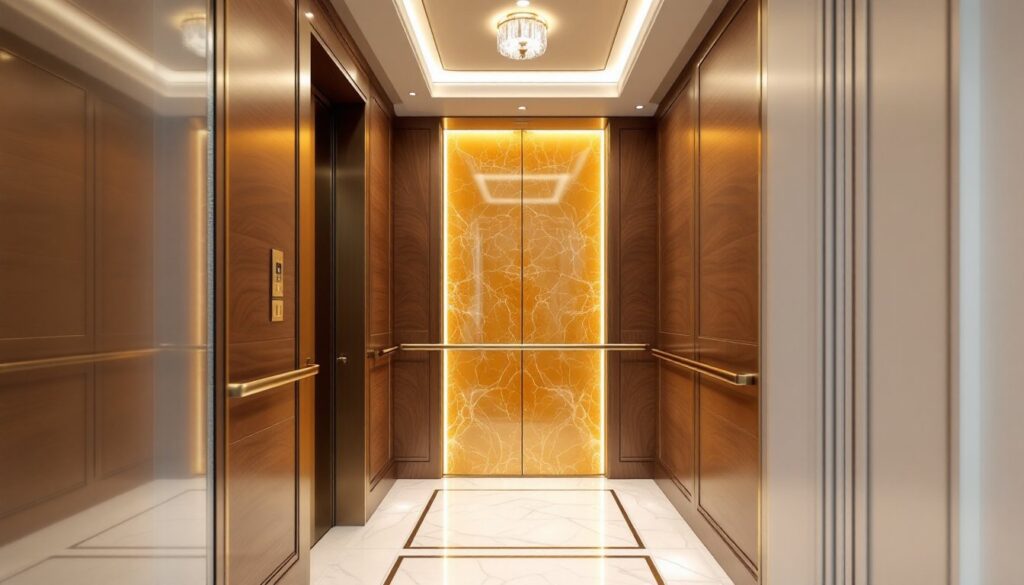
Backlit panels transform functional elements into focal points. Glass panels with edge-lit or rear-mounted LEDs create ethereal effects with minimal depth. Onyx and alabaster slabs glow when backlit, revealing natural veining patterns. According to designers featured on Architectural Digest, backlit stone installations rank among the most striking residential features when properly executed.
Controls panels need dedicated task lighting. Illuminated buttons are standard, but adding a small downlight or wall sconce ensures visibility for users with low vision. Position fixtures to avoid glare on shiny button surfaces.
Emergency lighting is mandatory per elevator codes. Battery-backed LED fixtures maintain illumination during power failures. These don’t need to be utilitarian, compact architectural emergency lights blend into design schemes while meeting life-safety requirements.
Customization Options to Match Your Home’s Aesthetic
Elevator interiors should feel like natural extensions of surrounding spaces, not isolated boxes. Design cohesion requires either matching adjacent rooms directly or establishing complementary relationships.
Flooring continuity creates seamless transitions. If hallways feature 5-inch white oak planks, extend those into the elevator cab. This requires careful coordination with the elevator contractor, flooring must account for the cab’s slight movement and meet weight restrictions. Floating floors don’t work in elevators: materials must be fully adhered to the cab floor.
Ceiling treatments often mirror the home’s architectural style. Coffered ceilings, tray details, or exposed beams (carefully proportioned) connect elevator cabs to formal spaces. In luxury kitchen design, ceiling details create visual interest, the same principle applies in vertical spaces.
Custom millwork allows design freedom impossible with stock cab packages. Built-in benches, wainscoting profiles that match hallway trim, or ceiling medallions for chandeliers transform generic cabs. Millwork must be engineered for the cab’s weight limits and attachment points, consult the elevator manufacturer’s specifications for approved fastening methods.
Handrails represent both safety features and design opportunities. Beyond code-required ADA-compliant rails, decorative rails in wrought iron, polished brass, or sculpted wood add architectural character. Rails must support 250 pounds in any direction per ICC A117.1 standards, even in private homes.
Control panel customization ranges from simple fixture finishes to fully integrated touchscreen systems. Traditional homes benefit from brass or bronze button fixtures with engraved floor numbers. Modern installations use flush-mounted glass panels with capacitive touch controls. Some manufacturers offer completely hidden controls behind wood panels that open with a touch-latch mechanism.
Design Styles: From Classic Elegance to Modern Minimalism
Specific design styles guide material and finish selections while maintaining the home’s overall character.
Traditional elegance relies on rich wood paneling, crown molding, and classic proportions. Raised-panel walls in mahogany or cherry with contrasting lighter ceilings create formal atmosphere. Small chandeliers or lantern-style pendants (properly rated for elevator vibration) provide period-appropriate lighting. According to insights from Home Bunch, traditional elevator designs increasingly incorporate modern conveniences like USB charging ports discretely integrated into classic millwork.
Coastal contemporary uses lighter palettes, whitewashed oak, soft grays, and seafoam greens. Glass panels with water-inspired etchings or textured finishes suggesting sand or waves reinforce the theme. Brushed nickel or chrome fixtures maintain the crisp, clean aesthetic.
Modern minimalism strips away ornamentation in favor of pure material beauty. A single exotic wood veneer covering all surfaces creates visual calm. Alternatively, monochromatic schemes with textural variation, matte painted walls, glossy ceiling, honed stone floor, achieve interest through surface quality rather than color changes. Concealed lighting and flush control panels eliminate visual clutter.
Industrial loft styles celebrate mechanical honesty. Exposed riveted metal panels, wire mesh glass, and visible cable systems reference commercial elevator aesthetics. This approach works particularly well in cable-driven elevators where mechanical elements contribute to the design rather than hiding them. Much like condo interior design maximizes smaller footprints, industrial elevator designs make deliberate material choices count.
Transitional designs blend traditional warmth with contemporary simplicity. Flat-panel wood walls without excessive molding, simple horizontal or vertical grain orientation, and understated lighting fixtures bridge classic and modern. This versatile approach works in homes where architectural styles mix across different eras or renovations.
Before finalizing any design, verify all materials and modifications with the elevator manufacturer and local building officials. Some jurisdictions require permits for significant cab modifications, and all changes must maintain fire ratings, weight limits, and safety clearances per ASME A17.1 elevator code. Working with qualified elevator interior specialists ensures both stunning results and code compliance.