
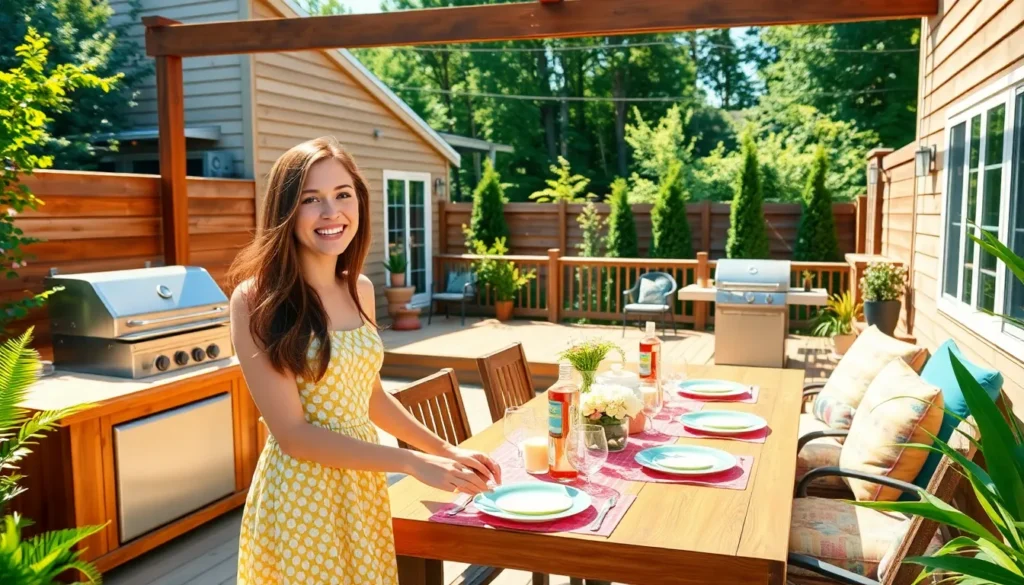
When it comes to creating the ultimate outdoor oasis, deck plans are the unsung heroes of home improvement. They transform mundane backyards into stunning retreats where barbecues sizzle and summer nights come alive. Whether it’s a cozy nook for morning coffee or a sprawling space for entertaining, the right deck plan can turn dreams into reality—without breaking the bank or your back.
Table of Contents
ToggleOverview of Deck Plans
Deck plans serve as essential blueprints for designing outdoor living spaces. They outline layout, dimensions, and materials, which significantly impact the overall aesthetic and functionality of a deck. Various design styles emerge from specific plans, accommodating tastes like contemporary, traditional, or rustic designs.
Furthermore, deck plans cater to particular functionalities. They can include features like seating areas, built-in grills, or even pergolas for shade. Such details enhance user experience by creating well-defined spaces for dining, socializing, or relaxing.
The consideration of spatial relationships is crucial. Deck plans ensure efficient use of available area while maintaining flow to the house and landscape. For example, a large deck might combine multiple zones, integrating entertainment and relaxation spots seamlessly.
Material selection influences deck plans as well. Choices like composite, wood, or PVC dictate the maintenance level and longevity of the structure. Budgetary concerns also play a role. By selecting cost-effective materials or offers, homeowners can adhere to their financial plans without compromising design.
Experts recommend reviewing existing outdoor elements before finalizing deck plans. Elevation changes, existing vegetation, and surrounding structures affect design outcomes. Each plan should also comply with local building codes and safety regulations, ensuring that each deck meets safety standards.
A well-conceived deck plan lays the groundwork for a versatile outdoor space. Prioritizing aspects like design style, functionality, and material choices creates a deck that aligns with the homeowner’s vision. This strategic planning maximizes enjoyment and enhances property value.
Types of Deck Plans
Deck plans come in various types, each tailored to meet specific needs and preferences. Detailed and general deck plans serve distinct purposes for homeowners.
Detailed Deck Plans
Detailed deck plans provide precise dimensions and layout configurations. These blueprints include specific measurements for every element, such as seating areas, railings, and built-in features. By offering clear visuals, such plans help in envisioning the space’s final look. Homeowners can easily assess material requirements and costs based on these comprehensive illustrations. Architects and designers often utilize detailed deck plans to ensure every aspect of design meets functionality and aesthetic goals. Compliance with local building codes is also easier when using these in-depth guidelines.
General Deck Plans
General deck plans serve as foundational templates that outline basic designs. They typically include standard layouts and essential features without intricate details. Homeowners interested in creating a deck can use these plans for a quick overview of size and shape options. General plans facilitate easier alterations, allowing individuals to add personal touches later. By focusing on overall structure rather than specifics, these plans provide flexibility for future design modifications. This adaptability is particularly useful for those working with budget constraints while considering essential materials and their associated costs.
Importance of Deck Plans
Deck plans play a crucial role in creating functional and attractive outdoor spaces. They provide a roadmap for transforming backyards into optimal retreats.
Space Utilization
Effective space utilization maximizes the outdoor area, ensuring every inch serves a purpose. Well-structured deck plans allow homeowners to determine the best placement for furniture and amenities, enhancing movement and flow. Incorporating features like built-in benches and storage solutions can improve functionality. Knowing dimensions ensures that seating areas and grilling stations fit comfortably, avoiding overcrowding. Additionally, strategic layouts consider access points, seamlessly connecting decks to gardens or patios, which creates an inviting environment. Adequate spacing encourages relaxation, making it easier for families to enjoy gatherings outdoors.
Design Aesthetics
Design aesthetics significantly influence the overall appeal of a deck. Attractive plans incorporate style elements that reflect personal taste, using materials and colors to enhance visual harmony with the home. Unique features such as railings and pergolas can elevate a simple design into a stunning focal point. Variety in textures, like combining wood with metal or plants, introduces character and depth. Each element of the plan contributes to an inviting atmosphere, emphasizing the importance of cohesive design. Homeowners can tailor their outdoor spaces to align with existing landscapes while ensuring beauty and functionality remain at the forefront.
How to Read Deck Plans
Reading deck plans requires careful attention to detail. Start by examining the layout, which showcases the arrangement of different areas. Each section often features dimensions indicating length and width, crucial for understanding the available space. Identify key elements such as seating arrangements and built-in features, which highlight the plan’s functionality.
Next, analyze the materials indicated in the plan. Types commonly used include composite, wood, and PVC, each influencing maintenance needs and costs. Knowing the materials helps in assessing overall durability and budget constraints.
Look for symbols and notations on the plans. These symbols generally represent specific features like railings or steps, ensuring clarity in design. It’s essential to understand these notations, as they convey important information about the deck’s structure.
Consider the spatial relationships within the plan. A well-designed plan optimally uses space, ensuring fluid movement between areas. Access points play a key role, allowing for easy transitions between indoor and outdoor spaces.
Check for compliance features. Many plans include notes on local building codes, emphasizing safety standards. Adhering to these regulations ensures that the deck meets legal requirements while enhancing overall usability.
Lastly, envision how the deck will integrate with the home and landscape. Aesthetic elements, such as color schemes and textural variations, connect the outdoor space with the overall property. Each design choice contributes to a cohesive look, maximizing the deck’s appeal.
Tips for Choosing the Right Deck Plan
Assess personal needs and outdoor space before selecting a deck plan. Consider the primary purpose of the deck, whether it’s for entertaining, relaxing, or dining. Evaluate the size and shape of the yard to determine how much space is available for a new deck.
Decide on the desired style. Whether it’s contemporary, traditional, or rustic, choose a design that complements the home’s architecture. Prioritize aesthetics by selecting materials and colors that create visual harmony with the existing landscape.
Identify key features that enhance functionality. Built-in seating and storage solutions optimize space and contribute to user comfort. Examine the inclusion of amenities like grills and lighting that improve usability.
Analyze local building codes for compliance. Understanding local regulations ensures safety and adherence to legal standards. It might also be beneficial to consult with professionals for precise measurements and compliance checks.
Budget considerations dictate material choice and design intricacies. Research costs associated with various materials including wood, composite, or PVC to find options that fit financial constraints. Long-term maintenance expenses should also factor into decision-making.
Finally, visualize how the deck integrates with the home and surroundings. Envision the arrangement and flow of furniture to enhance overall movement. When a deck plan harmonizes with the entire space, it creates an inviting, cohesive outdoor environment that maximizes enjoyment.
Deck plans are essential for transforming outdoor spaces into inviting retreats. They provide a clear vision for homeowners looking to enhance their backyards with functionality and style. By carefully considering layout dimensions and materials, individuals can create a deck that meets their needs while adhering to local building codes.
Incorporating unique features and design aesthetics elevates the overall appeal of the deck, ensuring it complements the home and landscape. With the right plan, homeowners can maximize their outdoor enjoyment and increase property value. Ultimately, a well-thought-out deck plan sets the foundation for a beautiful and functional outdoor living space.