
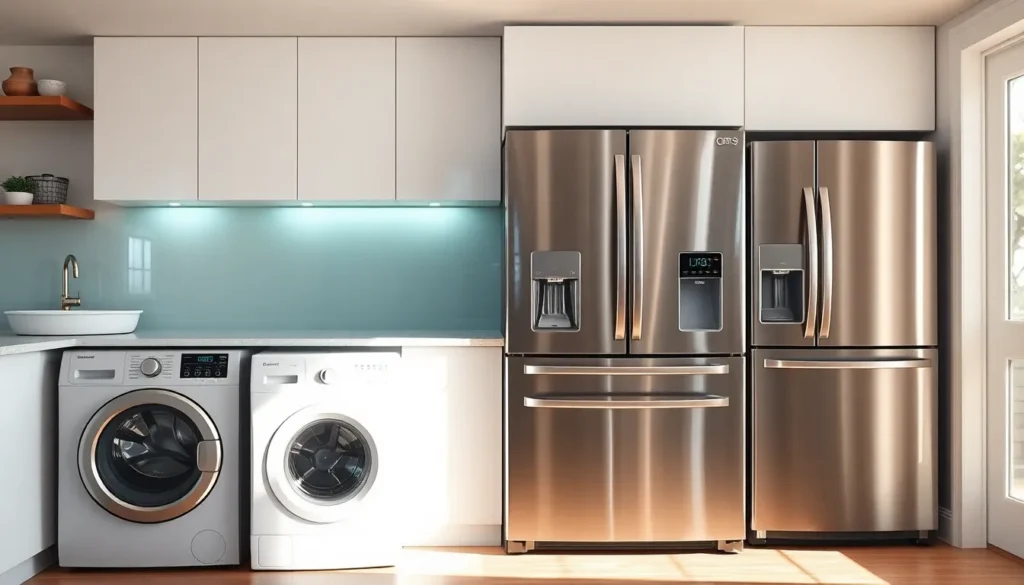
In today’s world, saving energy isn’t just a trend; it’s a lifestyle choice that can lighten both the planet’s load and your wallet. Picture this: a refrigerator that not only keeps your leftovers fresh but also saves you enough cash for that pizza night you’ve been dreaming about. Sounds like a win-win, right?
Overview of Energy-Saving Home Appliances
Energy-saving home appliances play a significant role in reducing utility bills and minimizing environmental impact. These appliances use advanced technology to operate efficiently, conserving energy without sacrificing performance.
Refrigerators are among the most common energy-efficient devices. Modern models often feature better insulation and compressor technology, leading to a reduction in energy consumption by up to 50% compared to older units.
Washing machines provide another example of efficiency in the home. High-efficiency washers can use up to 40% less water and save on energy costs thanks to shorter cycle times and lower temperatures.
Dishwashers have also seen considerable improvements in energy efficiency. Current models utilize less water and energy to complete cycles, with some capable of using as little as 3 gallons per load.
Compact fluorescent lamps and LED lighting are essential components of energy-saving strategies. While traditional incandescent bulbs convert only about 10% of energy into light, LED bulbs can achieve over 80% efficiency, drastically reducing electricity usage.
Additionally, smart thermostats contribute to energy conservation. These devices learn user preferences and adjust heating and cooling automatically, leading to energy savings of up to 15%.
Moreover, ENERGY STAR certification helps consumers identify top-performing products. Appliances bearing this label meet strict efficiency guidelines set by the U.S. Environmental Protection Agency.
Overall, choosing energy-saving home appliances can lead to lower energy costs and a reduced ecological footprint. Adopting these technologies supports sustainable living and empowers consumers to make environmentally friendly choices.
Benefits of Energy-Efficient Appliances

Energy-efficient appliances deliver significant advantages for both the environment and household budgets. Selecting these products leads to reduced energy consumption, diminishing the overall carbon footprint.
Environmental Impact
Energy-efficient appliances play a crucial role in conserving resources. They consume less electricity, which lowers greenhouse gas emissions. For instance, LED lighting achieves over 80% efficiency compared to traditional incandescent bulbs, resulting in less energy wasted. Additionally, high-efficiency washers use up to 40% less water, directly contributing to water conservation efforts. Using Energy Star certified products ensures that consumers are opting for items that meet strict efficiency guidelines. Prioritizing energy efficiency aids in the fight against climate change while promoting sustainable practices in everyday life.
Cost Savings
Investing in energy-efficient appliances leads to noticeable cost savings on utility bills. Modern refrigerators cut energy consumption by up to 50% compared to older models. High-efficiency dishwashers require as little as 3 gallons of water per load, which effectively reduces water bills. Furthermore, smart thermostats adjust heating and cooling systems based on user habits, generating energy savings of up to 15%. These savings accumulate over time, enhancing financial stability. Prioritizing energy-efficient options ultimately results in lower monthly expenses while contributing to long-term environmental goals.
Top Energy-Saving Home Appliances
Energy-efficient home appliances significantly lower utility costs and minimize environmental impacts. Various options exist, each with unique features that promote sustainability.
Refrigerators
Modern refrigerators feature advanced insulation and compressor technology, reducing energy consumption by up to 50% compared to older models. These appliances maintain food freshness while using less electricity. Energy-efficient units also come equipped with smart technology, allowing for temperature adjustments based on usage patterns. Many consumers benefit from ENERGY STAR certified refrigerators, which guarantee high efficiency and performance.
Washing Machines
High-efficiency washing machines consume up to 40% less water compared to traditional models. These machines operate on shorter cycles and lower temperatures, saving both water and energy. Smart options recognize wash loads and adjust settings accordingly, resulting in optimized cleaning power without wasting resources. Selecting ENERGY STAR certified washing machines ensures top-tier efficiency and helps users save on utility bills.
Dishwashers
Dishwashers have evolved remarkably, with some models using as little as 3 gallons of water per load. These appliances deliver excellent cleaning performance while conserving both energy and water. Features like soil sensors automatically adjust wash cycles based on load needs for improved efficiency. Choosing ENERGY STAR certified dishwashers guarantees reduced energy usage and contributes to overall sustainability in the home.
Heating and Cooling Systems
Heating and cooling systems can achieve energy savings of up to 15% when utilizing smart thermostats. These devices learn user preferences, adjusting temperatures based on occupancy trends for optimal efficiency. High-efficiency models, such as heat pumps, also provide significant energy savings compared to older systems. Selecting ENERGY STAR certified heating and cooling appliances ensures reduced energy consumption and environmental impact, supporting a sustainable lifestyle.
Tips for Choosing Energy-Efficient Appliances
Selecting energy-efficient appliances ensures reduced utility bills and a smaller carbon footprint. Knowing what features to look for simplifies the process.
Energy Star Certification
Look for the ENERGY STAR label on appliances. This certification indicates that products meet strict energy efficiency guidelines set by the U.S. Environmental Protection Agency. Appliances marked with this label typically use 10% to 50% less energy than their conventional counterparts. Consider not just the purchase price but also long-term savings on energy costs. By investing in ENERGY STAR certified items, households can contribute to environmental sustainability while enjoying enhanced performance.
Comparing Energy Consumption
Examine the energy consumption ratings before making a purchase. Appliances have labels indicating their estimated energy usage in kilowatt-hours (kWh) per year. Compare these values among similar products to identify the most efficient option. For instance, switching from an older refrigerator to a newer model can lead to energy savings of up to 50%. Remember that even small differences in energy consumption can accumulate over time, resulting in significant savings. Prioritizing energy-efficient models fosters smarter spending patterns and a more responsible lifestyle.
Energy-saving home appliances are more than just a trend; they represent a practical approach to living sustainably while saving money. By investing in modern technologies like high-efficiency refrigerators and smart thermostats, homeowners can significantly reduce their energy consumption and utility bills.
Choosing appliances with the ENERGY STAR label ensures that consumers are selecting products that meet rigorous efficiency standards. As energy costs continue to rise, making informed decisions about home appliances becomes increasingly important.
Ultimately, embracing energy-efficient options not only benefits individual households but also contributes positively to the environment, making it a smart choice for everyone.