
Imagine walking into a home that knows you better than your best friend. A place where lights adjust to your mood and your coffee brews itself just in time for that much-needed caffeine fix. Smart home design isn’t just a trend; it’s the future of living, blending comfort with cutting-edge technology.
From voice-activated assistants to energy-efficient appliances, the possibilities are endless. It’s like having a personal butler who never judges your midnight snack choices. With the right design, a smart home can be both stylish and functional, making everyday life easier and more enjoyable. So, buckle up as we dive into the world of smart home design and discover how to turn your living space into a futuristic haven that’ll make your neighbors green with envy.
Overview of Smart Home Design
Smart home design integrates advanced technology with aesthetics to create efficient living environments. Modern homes utilize devices that enhance convenience and improve the quality of life. Systems can include smart thermostats that adjust temperatures based on occupancy and smart lighting that adapts to natural light levels.
Connectivity plays a crucial role in smart homes. Devices communicate through a central hub, allowing seamless interaction between appliances and users. Automated functions enable homeowners to control lighting, security systems, and entertainment from smartphones or tablets.
Design also prioritizes energy efficiency. Smart homes monitor usage patterns, reducing waste and lowering utility bills over time. By using smart plugs and energy-efficient devices, homeowners contribute to environmental sustainability.
Security features enhance peace of mind. Smart security cameras and alarms provide real-time alerts and remote monitoring capabilities. Homeowners can check their property from anywhere, ensuring safety at all times.
Lastly, personalization makes smart home design unique. Customizable settings allow residents to create atmospheres that suit their preferences. From mood lighting to programmed coffee brewers, technology adapts to individual lifestyles, transforming houses into truly smart environments.
Key Elements of Smart Home Design
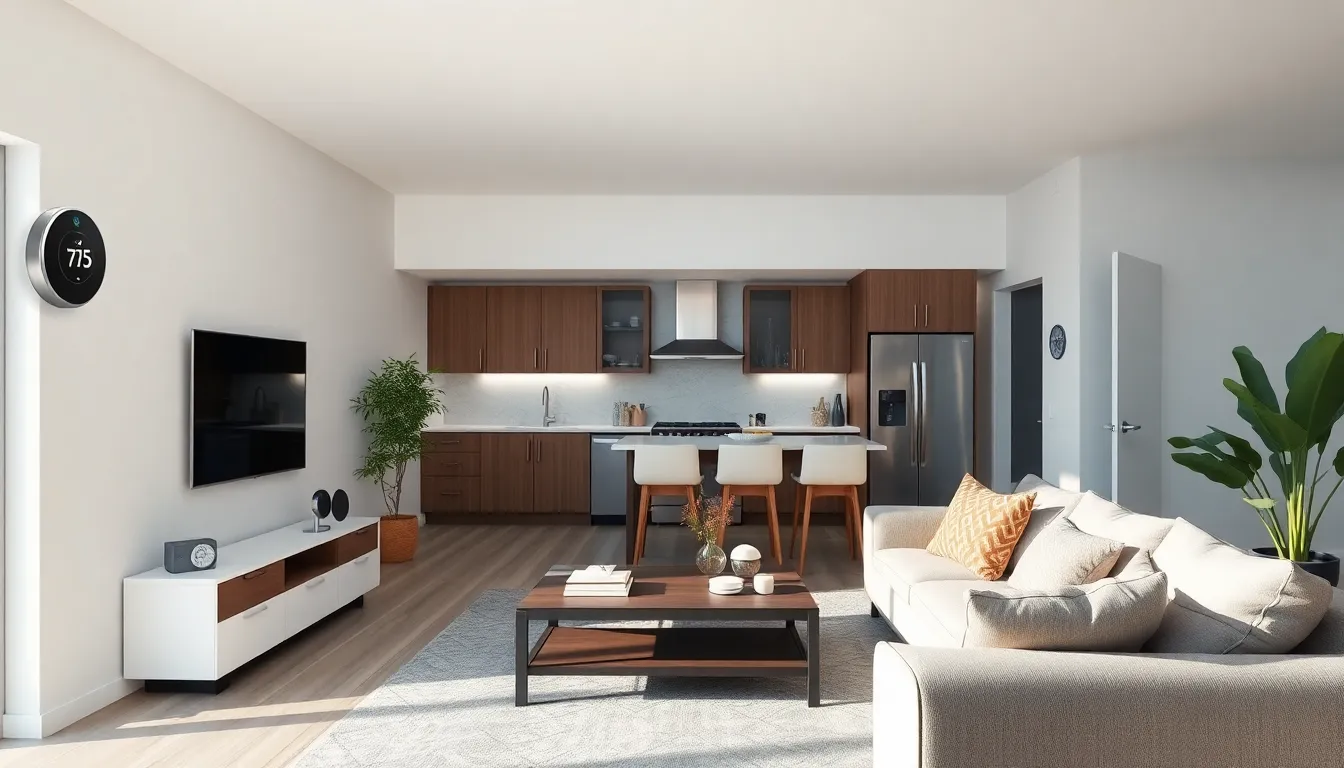
Smart home design incorporates several essential elements that enhance functionality and user experience. Key components include connectivity, security features, and energy efficiency.
Connectivity and Automation
Connectivity serves as the backbone of smart home design. Devices connect through a central hub, enabling seamless communication and control. Homeowners can automate routines with easy voice commands or mobile apps. Smart lighting adjusts based on preferences, creating the perfect ambiance. Entertainment systems sync effortlessly, providing an immersive experience. Automation enhances daily routines, allowing residents to focus on what matters most.
Security Features
Security features play a critical role in smart home design. Smart cameras and alarms provide real-time monitoring and alerts, ensuring safety. Homeowners can check live feeds on their smartphones from anywhere. Integrated security systems allow for customized settings, such as motion detection and automatic locking. Remote access empowers users to respond instantly to potential threats, offering peace of mind. Enhanced security measures protect property and family, bringing an added layer of confidence.
Energy Efficiency
Energy efficiency stands as a priority in smart home design. Smart thermostats monitor and adjust temperatures based on occupancy patterns, optimizing energy use. Homeowners benefit from real-time usage data, allowing informed choices about consumption. Smart appliances contribute to reduced utility bills by operating at optimal times. Integration of solar panels further enhances efficiency, providing sustainable energy solutions. Prioritization of energy efficiency results in both cost savings and environmental benefits.
Benefits of Smart Home Design
Smart home design offers numerous advantages that enhance daily life. These benefits become evident when considering aspects like convenience, remote monitoring, and cost savings.
Convenience and Comfort
Smart home design significantly increases convenience and comfort. Home automation allows users to control lighting, temperature, and appliances remotely. Automated routines make daily tasks easier, such as scheduling coffee machines to brew at specific times. Comfortable home environments can be customized with individualized lighting schemes and climate settings. Voice-controlled assistants simplify interactions with smart devices, ensuring hands-free operation when needed. Task automation promotes a lifestyle where mundane chores demand less attention, leaving more time for leisure activities.
Remote Monitoring
Remote monitoring plays a crucial role in smart home design. Homeowners gain the ability to oversee their properties in real time, thanks to smart cameras and security systems. Notifications alert residents to unusual activities, ensuring quick responses. Mobile applications allow access to live feeds and recordings from anywhere. Monitoring environmental conditions, such as temperature and air quality, helps maintain comfort. Smart sensors can identify leaks or other issues, enabling timely mitigation. Enhanced awareness contributes to a secure living environment and reduces anxiety over property safety.
Cost Savings
Cost savings remain a significant advantage of smart home design. Smart thermostats optimize heating and cooling, adjusting settings based on occupancy patterns. Energy-efficient appliances consume less power, contributing to lower utility bills. Monitoring tools provide insights into energy consumption, helping residents identify areas for improvement. Incentives from utility companies for reduced energy usage often reduce costs further. Long-term investments in smart technology lead to overall savings while promoting eco-conscious practices. Overall, smart home designs create environments that prioritize financial efficiency and sustainability.
Challenges in Smart Home Design
Smart home design presents several challenges that can impact efficiency and user experience. Compatibility among devices often creates difficulties for homeowners seeking seamless integration.
Compatibility Issues
Device compatibility stands out as a major hurdle in smart home design. Many products operate on different protocols, restricting their ability to communicate with one another. Consumers frequently face limitations when attempting to coordinate various brands and systems within a single smart ecosystem. Ensuring that devices from different manufacturers work together often requires research and sometimes additional hubs or bridges, complicating the setup process. These integration challenges can deter potential users who seek a cohesive technology experience.
Privacy Concerns
Security and privacy issues also arise in smart home environments. Connected devices generate vast amounts of data, creating potential vulnerabilities that can be exploited by malicious actors. Users often express concerns about unauthorized access to personal information stored within these systems. Additionally, many smart devices may share data with third parties, further complicating privacy management. Homeowners must remain vigilant, implementing strict security measures to safeguard their networks and sensitive information, emphasizing the importance of responsible smart technology usage.
Future Trends in Smart Home Design
Emerging technologies shape the future of smart home design. Integration of artificial intelligence enhances device functionality and user interaction. Voice-activated systems gain popularity, allowing users easy access to control various home elements. Smart sensors and analytics will facilitate more personalized living experiences, adapting to user habits for maximum comfort.
Sustainability approaches become a focal point in new smart designs. Energy-efficient systems, like solar panels and smart appliances, will play key roles in reducing energy consumption. Homes equipped with smart thermostats optimize heating and cooling, resulting in significant savings. Smart solutions also help track energy usage, fostering a proactive approach to sustainability.
Security advancements will emphasize protection without sacrificing convenience. IoT devices spread across homes will communicate seamlessly, ensuring instant alerts for security breaches. Enhanced encryption practices must safeguard personal data from unauthorized access, instilling confidence in homeowners. Facial recognition technologies may also enter mainstream use, providing added layers of security.
Design aesthetics will reflect user preferences and integrate technology smoothly. Minimalist designs, enhanced with smart features, provide both style and functionality. Increased focus on user-friendly interfaces simplifies interaction with smart systems, making technology accessible to all.
Collaboration among diverse technology providers is crucial for a unified smart home ecosystem. Compatibility between devices strengthens user experience. Partnerships among tech giants foster innovation, leading to a cohesive integration of smart home products.
As smart home design continues to evolve, keeping abreast of these trends remains essential for homeowners. Enhanced convenience, environmental considerations, and sleek aesthetics unite to create homes that truly meet occupants’ needs.
Smart home design represents a significant leap toward enhancing daily living through technology. By integrating connectivity, security, and energy efficiency, it transforms homes into responsive environments that cater to individual needs. The potential for personalization ensures that each space reflects its occupants’ preferences while promoting sustainability and cost savings.
As technology continues to evolve, the future of smart homes looks promising. With advancements in artificial intelligence and improved security measures, homeowners can expect even greater convenience and peace of mind. Embracing smart home design not only elevates comfort but also contributes to a more efficient and secure lifestyle.