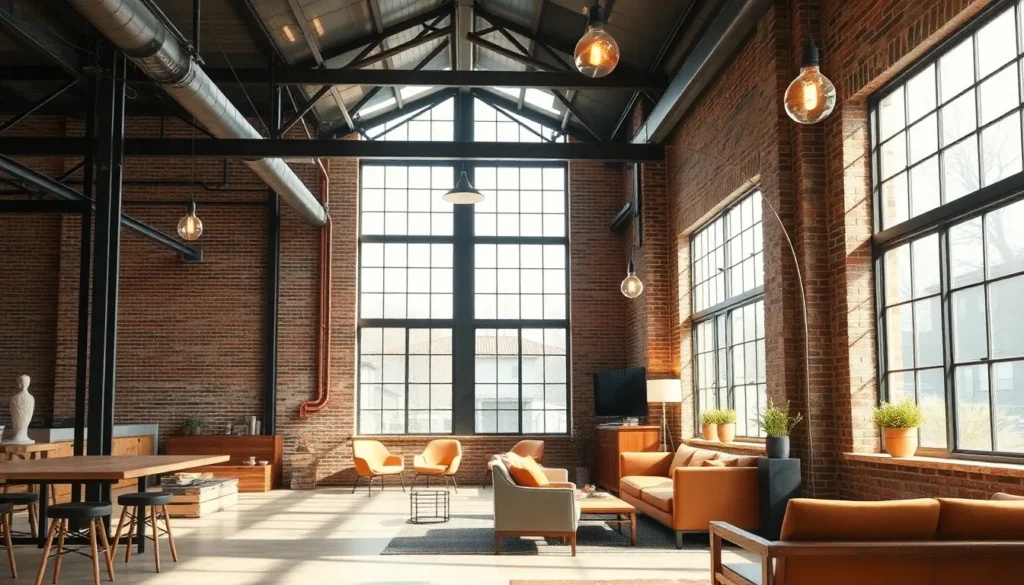
Imagine walking into a space that feels like a blend of a chic warehouse and a trendy coffee shop. That’s the magic of industrial interior design. With its raw materials and edgy aesthetics, this style transforms ordinary spaces into extraordinary experiences. Exposed brick, metal beams, and vintage furnishings create a vibe that’s both rugged and refined, making it the perfect backdrop for creativity and conversation.
But don’t let the name fool you—industrial doesn’t mean cold or uninviting. It’s all about striking a balance between functionality and flair. Whether you’re revamping your home or sprucing up an office, embracing industrial elements can add character and charm. So grab your hard hat and let’s dive into the world of industrial interiors, where style meets substance, and every corner tells a story. Who knew that pipes and concrete could be so chic?
Overview of Industrial Interior
Industrial interior design uniquely combines raw materials with stylish aesthetics. Exposed brick walls capture attention and add texture, while metal beams contribute structural interest. Vintage furnishings bring history into contemporary spaces, enhancing the overall character. A mix of functionality and visual appeal makes this style suitable for both living and working environments.
Rustic elements, like reclaimed wood and weathered metals, create an inviting atmosphere. Designers favor open spaces, allowing natural light to illuminate the area. High ceilings and large windows offer airy feelings that contribute to creativity and collaboration.
Color palettes in industrial interiors often utilize neutral tones, such as grays, browns, and blacks. These shades facilitate the integration of vibrant accents through accessories like art pieces or textiles. Individuality shines with eclectic decor, where each element tells a story.
Lighting options are essential in this style, and pendant lights or Edison bulbs fit perfectly. Their industrial look complements the overall aesthetic and enhances functionality. Layered lighting solutions help create warmth, counteracting any potential coldness associated with industrial design.
Popular materials include concrete, metal, and glass. Each contributes to the rugged yet refined atmosphere characteristic of this style. Industrial interiors encourage adaptability, making it simple to mix and match various elements for personalized spaces. Emphasizing simplicity, this design approach elevates environments while maintaining a sense of authenticity.
Key Elements of Industrial Interior
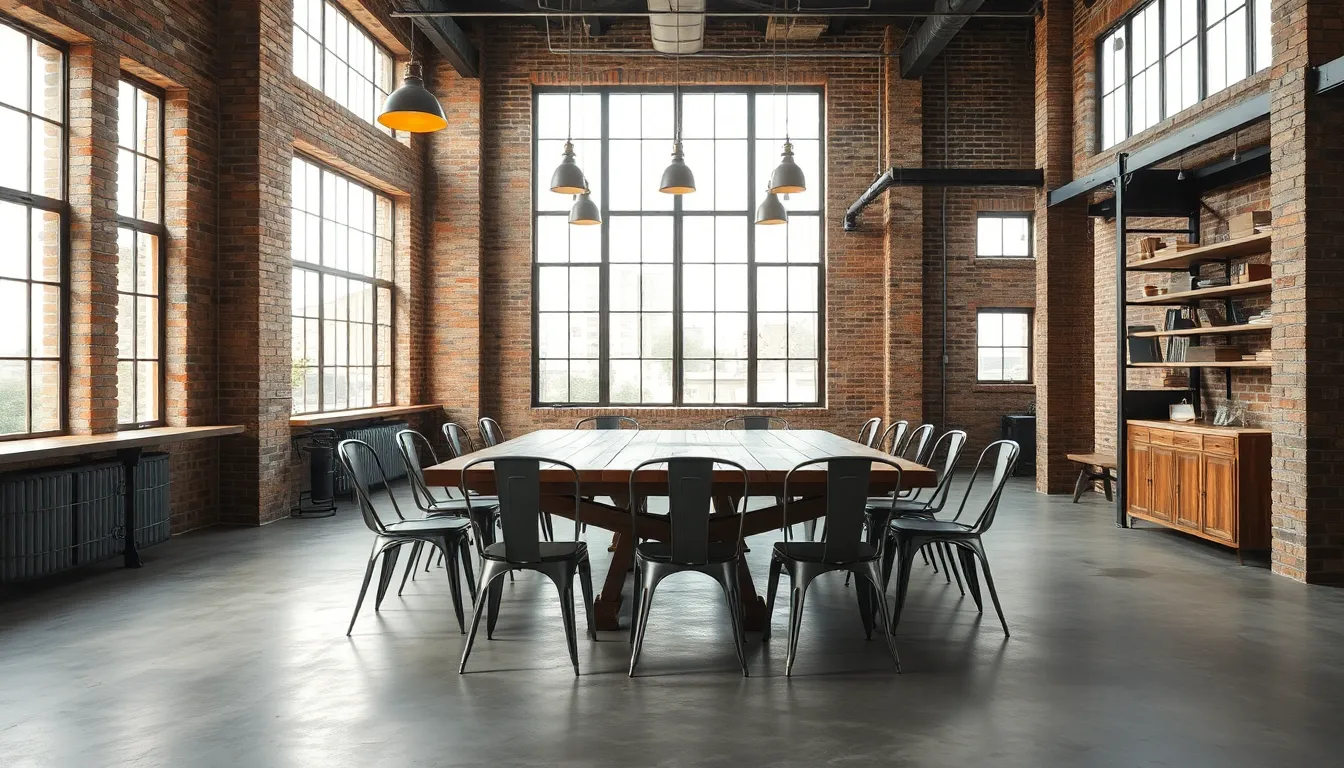
Industrial interior design features a distinctive combination of raw materials, textures, and finishes that create an inviting atmosphere. Essential components contribute to the overall aesthetic and functionality.
Materials Used
Concrete surfaces, exposed brick, and weathered metals define the industrial look. Reclaimed wood adds warmth while maintaining ruggedness. Steel and iron elements reinforce structural integrity and industrial character. Glass accents allow light to permeate spaces, enhancing openness. These materials blend seamlessly, creating environments that are both practical and visually striking.
Color Palette
The color palette primarily showcases neutral tones. Shades of gray, brown, and black dominate, providing a versatile backdrop. Vibrant accents, often in deep greens or rusty reds, pop against the muted tones. Incorporating metallic hues can elevate the design, adding not just style but depth. Overall, this color scheme fosters a cohesive and balanced feel in both home and office spaces.
Furniture and Decor
Furniture choice plays a vital role in industrial interiors. Vintage pieces and minimalist designs often serve as focal points. Large, sturdy tables and comfortable seating enhance functionality without sacrificing style. Incorporating industrial details in decor, like metal wall art and old factory lamps, enriches the overall theme. These selections create an environment that encourages creativity and collaboration, echoing the essence of the industrial style.
Design Styles Within Industrial Interior
Industrial interior design encompasses various styles that blend raw aesthetics with functionality. Two prominent styles within this genre are minimalist industrial and rustic industrial.
Minimalist Industrial
Minimalist industrial design emphasizes simplicity, focusing on clean lines and open spaces. Stripped-down furniture complements large, airy layouts. Metal elements may highlight structural features, while muted color schemes create a calming environment. Functionality does remain a priority, with multi-purpose pieces contributing to the overall aesthetic. Artwork and decor often feature geometric shapes, enhancing visual interest without clutter. Additionally, lighting fixtures tend to be simple yet striking, showcasing the raw and unrefined nature of industrial materials.
Rustic Industrial
Rustic industrial design blends the warmth of rustic elements with industrial charm. Reclaimed wood and weathered metals create a cozy atmosphere. Textures play a significant role, with rough finishes contrasting smooth surfaces. This style often incorporates vintage furniture, which adds character to the space. Color palettes typically consist of earthy tones, giving a sense of grounding. Plants and natural elements infuse life, enhancing the inviting feeling. Lighting choices frequently include warm Edison bulbs, creating a nostalgic yet modern ambiance.
Advantages of Industrial Interior
Industrial interior design boasts several key advantages that attract homeowners and businesses alike. First, it embraces a unique blend of aesthetics that highlights raw materials. Exposed brick walls and metal beams not only add character but create an atmosphere that feels both edgy and sophisticated.
Additionally, the open space concept enhances functionality. High ceilings and large windows flood areas with natural light, promoting a sense of airiness. Collaboration thrives in these environments, making industrial designs ideal for creative spaces and offices.
Versatility stands as another advantage. Industrial interiors easily adapt to various styles, from minimalist to rustic. Vintage furnishings can coexist with modern decor, allowing for personalized touches in design.
Cost-effectiveness enhances appeal, too. Using reclaimed materials and upcycled furniture often reduces expenses while adding unique elements. This approach not only supports sustainability but also creates distinctive visual narratives in spaces.
Low maintenance represents a noteworthy benefit. Materials like concrete and metal are durable, ensuring longevity with minimal upkeep. These choices align with busy lifestyles, where simplicity and efficiency matter.
A cohesive color palette further adds to the charm. Neutral tones serve as the foundation, enabling vibrant decor accents to shine. This enhances visual interest without overwhelming spaces, appealing to varied design preferences.
Finally, the industrial aesthetic encourages creativity. The rugged charm and artistic freedom found in these environments foster inspiration. Designers and occupants alike benefit from a space that motivates and rejuvenates.
Challenges in Industrial Interior Design
Designing industrial interiors presents several challenges that require careful consideration. Space constraints can limit design options, making it difficult to achieve the desired aesthetic. Open floor plans, while popular, often complicate the arrangement of furniture and functional areas.
Another significant issue involves balancing raw materials with comfort. Exposed elements like concrete and metal, while visually appealing, might contribute to a cold atmosphere if not warm elements accompany them. Achieving this balance demands creativity and thoughtful selection of textiles and decor.
Acoustics often pose a challenge as well. Industrial spaces with high ceilings and hard surfaces can generate excessive noise. Incorporating soft furnishings, such as rugs and upholstered furniture, can aid in sound absorption, enhancing comfort.
Lighting arrangements require special attention. Natural light plays a crucial role in creating an inviting environment, but many industrial spaces lack sufficient windows. Strategically placing fixtures, such as pendant lights or LED strips, can help achieve a well-lit ambiance.
Additionally, maintaining the authenticity of industrial design may be difficult. Many designers face pressures to modernize spaces, risking a departure from the original aesthetic. Sticking to core industrial elements while incorporating contemporary touches calls for a nuanced approach.
Cost control remains a priority, as high-quality materials often come with a steep price. Finding affordable alternatives or sourcing reclaimed materials can reduce expenses while staying true to the industrial theme.
Lastly, sustainability concerns affect material choices. Sourcing eco-friendly items while retaining an industrial look can be challenging. Prioritizing materials that emphasize both sustainability and style presents a complex but rewarding endeavor.
Industrial interior design stands out for its unique ability to merge raw aesthetics with functional elegance. By incorporating elements like reclaimed wood and exposed metal, spaces become both inviting and inspiring. This style not only enhances creativity but also allows for personalized touches that reflect individual tastes.
Embracing industrial design means celebrating the beauty of imperfections while ensuring comfort and warmth. Its versatility makes it suitable for various environments, from cozy homes to dynamic workplaces. As more people discover the charm of industrial interiors, they’ll find that this approach fosters a sense of community and collaboration, making every space feel alive and engaging.