
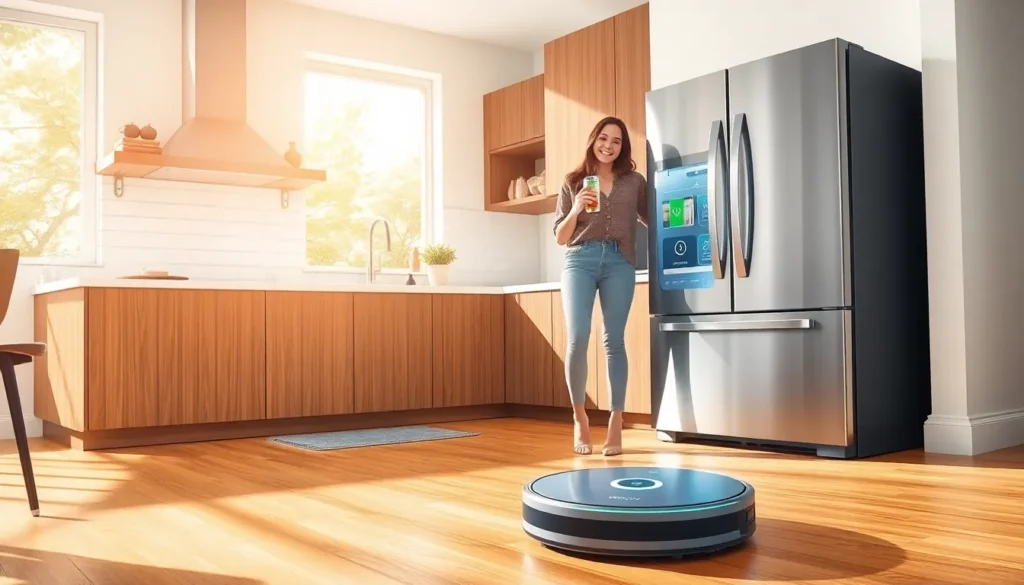
Imagine a world where your coffee brews itself while you snooze, and your fridge reminds you when you’re out of milk. Welcome to the smart home appliances market, where technology meets convenience in the most delightful ways. This booming industry isn’t just about gadgets; it’s about transforming everyday chores into effortless experiences.
As more people embrace the wonders of automation, the smart home appliances market is expanding faster than a toddler’s imagination. From smart thermostats that know when to warm up your living room to robotic vacuum cleaners that dodge your pet’s toys like a pro, these innovations are designed to make life easier. Dive into this fascinating realm where efficiency reigns supreme and discover how these clever devices are changing the way we live—one beep at a time.
Table of Contents
ToggleOverview of Smart Home Appliances Market
The smart home appliances market has seen significant expansion. According to a recent report, the market size is projected to reach $195 billion by 2028, growing at a compound annual growth rate (CAGR) of 27.1% from 2021 to 2028. Increasing consumer demand for convenience drives growth, as technology continues to integrate with everyday household tasks.
Innovations in smart appliances enhance daily routines. Devices such as smart refrigerators enable users to track food inventory while providing recipe suggestions. Washing machines equipped with Wi-Fi capabilities allow remote operation and monitoring via smartphone apps, which improves efficiency.
Sustainability also plays a key role in market dynamics. Eco-friendly appliances, such as energy-efficient smart thermostats, lead to reduced utility bills and a smaller carbon footprint. Many consumers prioritize energy-saving features when selecting new appliances, further boosting the market.
Consumer awareness of these technologies is rising. Educational marketing campaigns inform potential buyers about the benefits of smart devices, such as enhanced security and convenience. As users become more familiar with automation, adoption rates for these appliances increase.
Regional markets contribute distinct trends. North America dominates the market, driven by high disposable income and a tech-savvy population. Meanwhile, Asia-Pacific shows rapid growth, attributed to urbanization and a rising middle class eager to embrace modern conveniences.
Connectivity remains a crucial element. The Internet of Things (IoT) enables seamless integration between devices, promoting interoperability and user-friendly experiences. This connectivity facilitates automation routines that streamline daily tasks, making smart appliances integral to modern living.
Key Drivers of Market Growth
The smart home appliances market thrives on several key drivers. These factors significantly influence its rapid expansion and adoption.
Technological Advancements
Innovations in technology propel growth in the smart home appliances sector. Advanced sensors, artificial intelligence, and machine learning enhance functionality. Smart devices, like refrigerators equipped with touchscreens and washing machines that learn user preferences, improve convenience. The rise of the Internet of Things (IoT) facilitates seamless connectivity among devices, allowing for remote monitoring and control. Enhanced compatibility with voice assistants also boosts user interaction, making smart appliances more appealing. These advancements contribute directly to an impressive projected market size of $195 billion by 2028.
Consumer Demand for Convenience
Consumer interest in convenience drives the smart home appliances market. Today’s lifestyle demands quick solutions that simplify daily tasks. Busy individuals seek appliances designed to optimize time and minimize effort. Features such as remote operation and automated settings attract consumers seeking efficiency. Increasing awareness about the benefits of connected devices supports adoption rates. Data indicates this demand is a primary factor behind the market’s anticipated compound annual growth rate of 27.1% from 2021 to 2028.
Major Players in the Market
The smart home appliances market features several prominent players driving innovation and growth. Leading brands dominate with advanced technologies and feature-rich products.
Leading Brands and Manufacturers
Samsung stands as a frontrunner, offering smart refrigerators and washing machines that integrate seamlessly with smart home ecosystems. LG follows closely with its range of AI-powered devices, enhancing user convenience significantly. Whirlpool has joined the competition with its smart kitchen appliances designed for energy efficiency. Philips also plays a role by providing smart lighting solutions that improve home ambiance. Key manufacturers continue to invest in research and development, ensuring they maintain their market positions amid growing consumer demand for smart solutions.
Emerging Startups
Innovative startups are reshaping the landscape of smart home technology. Wyze Labs focuses on affordability, providing low-cost smart devices that appeal to a broad audience. SmartThings, a subsidiary of Samsung, emphasizes comprehensive home automation through a user-friendly platform. Another notable player is Ecobee, which specializes in smart thermostats, enhancing energy efficiency in homes. Several startups prioritize sustainability, creating eco-friendly appliances that resonate with environmentally conscious consumers. As these new entrants emerge, they contribute to the market’s dynamic growth and variety.
Trends Shaping the Future
Innovations in smart home appliances continue to evolve, significantly impacting daily living. Experts identify key trends, such as the integration of AI and IoT along with sustainability efforts.
Integration of AI and IoT
Brands actively incorporate artificial intelligence and the Internet of Things into their appliances. AI enhances user experiences through predictive learning, tailoring functions to individual preferences. IoT creates interconnectivity, allowing appliances to communicate efficiently. Consumers engage more with smart devices as they easily manage tasks through smartphone apps and voice commands. Data from appliances contributes to improved performance over time, making them increasingly user-friendly. Industry leaders capitalize on these technologies, driving market growth to an expected size of $195 billion by 2028.
Sustainability and Energy Efficiency
Growing consumer awareness of environmental impacts shapes the development of smart appliances. Eco-friendly designs and energy-efficient features become common, appealing to environmentally conscious buyers. Smart refrigerators and washing machines provide insights into energy consumption, helping users make informed choices. As sustainability becomes a priority, brands focus on reducing carbon footprints while maintaining performance standards. Efforts to create appliances that lower utility bills resonate with a broader audience, driving demand for greener solutions. The combination of convenience and sustainability propels market growth, supporting the projected CAGR of 27.1%.
Challenges Facing the Market
The smart home appliances market faces several challenges that could impact its growth and adoption.
Security Concerns
Security concerns present significant hurdles for consumers considering smart home appliances. Cybersecurity threats increasingly worry homeowners due to the frequency of data breaches. Hackers targeting connected devices may gain unauthorized access, posing risks to personal information. Users often hesitate to invest in smart technologies when they doubt the safety of their data. Incidents involving compromised smart cameras or voice assistants amplify these fears, highlighting the need for robust security measures. Manufacturers must prioritize the development of secure devices to build trust and encourage wider adoption. Transparency in data handling practices also plays a vital role in addressing consumer fears.
High Initial Costs
High initial costs represent another barrier that affects market penetration. Many smart home appliances come with a premium price tag compared to traditional models. For instance, smart refrigerators and connected washing machines often feature advanced technology, leading to increased expenses. The upfront financial investment discourages budget-conscious consumers from making purchases, despite long-term savings on energy bills. Some users may consider the expense unjustified, especially without immediate benefits. Manufacturers must find ways to reduce production costs to make smart devices more accessible. Offering financing options or promotional discounts could also help consumers overcome financial barriers.
The smart home appliances market is poised for remarkable growth as technology continues to evolve and consumer demand for convenience rises. With an anticipated market size of $195 billion by 2028 the integration of AI and IoT is transforming how households operate. Major brands and innovative startups are driving this change by offering advanced and sustainable solutions that cater to modern lifestyles.
However challenges such as security concerns and initial costs must be addressed to ensure broader adoption. As manufacturers prioritize safety and affordability the potential for smart appliances to become essential in everyday life increases. The future of home automation looks promising with endless possibilities for enhancing efficiency and sustainability in homes across the globe.